
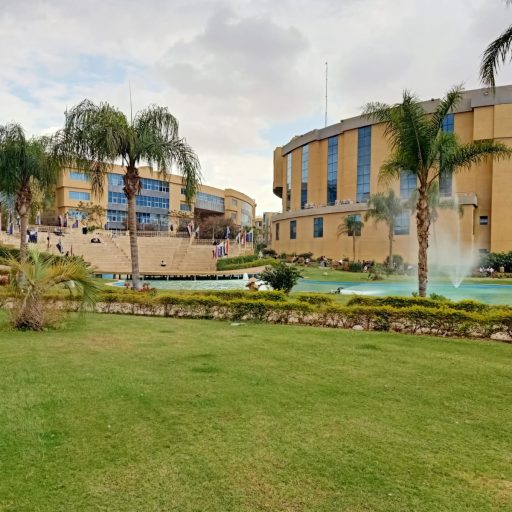

The Graduate School of Education and Research at Badr University seeks to keep pace with the changes in the local, regional, and international labor market by responding through the design of new interdisciplinary academic programs. These programs are derived from the integration and coherence of learning outcomes across different fields, with the aim of preparing generations that meet the requirements of the labor market.
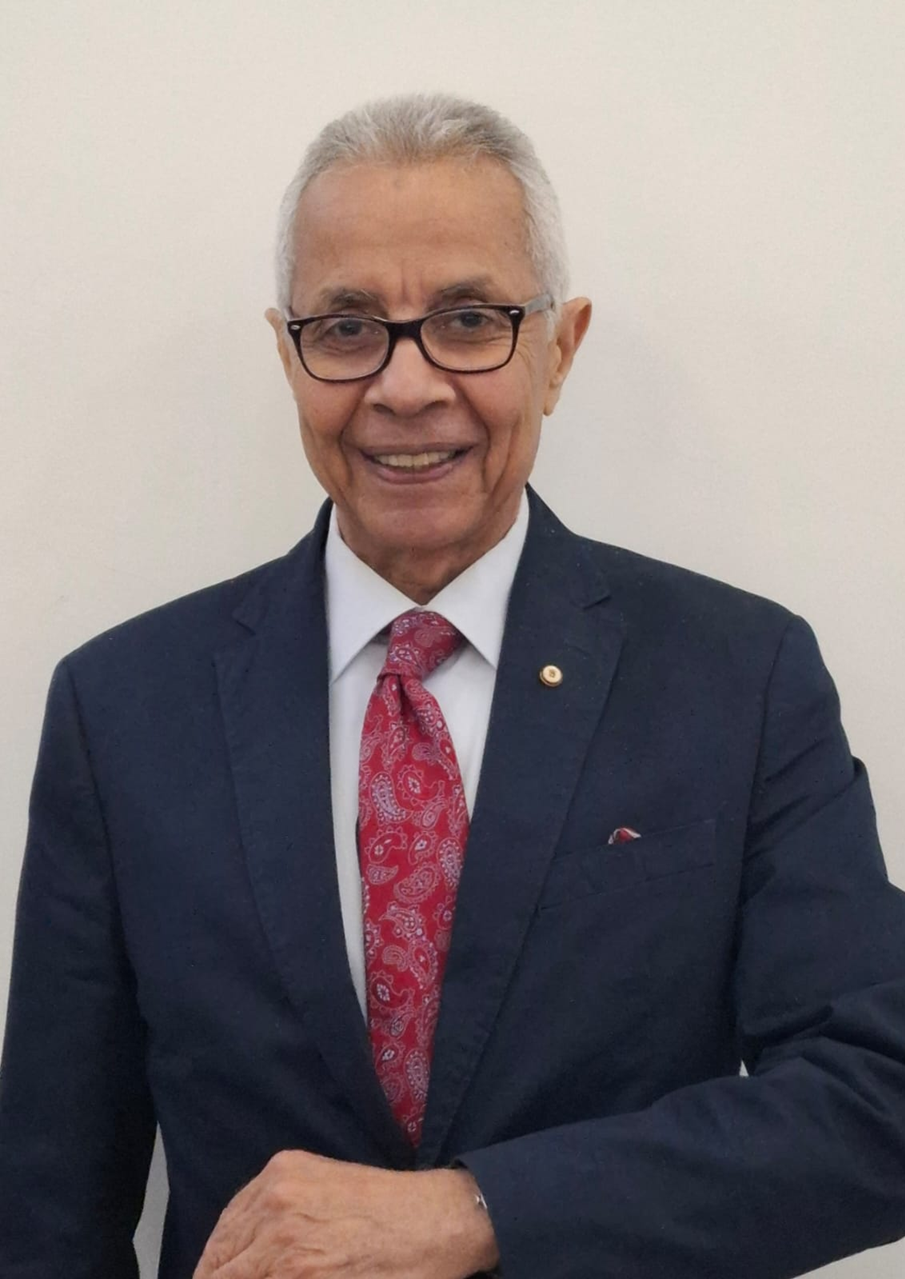
Maged Zaki, PhD, was born in Cairo, Egypt, in 1954. Educated at Cairo University and then Reading University, UK, he studied the Cellular Basis of Embryogenesis using Transmission Electron Microscopy and Molecular Markers under the supervision of Professor Hugh Dickinson of Oxford University.
With an academic background in the field of Genetic Engineering and Biotechnology and research, he held a postdoctoral fellowship at Victoria University, British Columbia, Canada. His enthusiasm for research extended to the domains of cloning, program cell death, embryogenesis, tissue culture, stress protein synthesis and the no-return point. Contribution to the scientific community included published scientific articles in national and international scientific journals, editing textbooks, and organizing national and international conferences and workshops.
Despite his great passion for research, the lack of current quality assurance process in Egyptian institutions was the driving force to shift interest into quality assurance in education and students’ learning. He feels strongly about the quality of education, and how essential it is for educational institutions not only in Middle East and North Africa, but also worldwide.
For this reason and early in the 1990’s, he devoted himself to serving a wider community to enhance the quality of education by taking part in the activities of several accrediting agencies, including the National Association of Quality Assurance and Accreditation in Education, the Northwest Association for Accreditation, and the American International Accreditation Association of Schools and Colleges, whose mission is to tackle these challenges.
The journey with accrediting agencies included engagement in developing accreditation standards, academic standards, bylaws, leading many accreditation visits for schools and chairing over 30 accreditation visits to different faculties at public and private universities.
It has been a privilege to participate in the progress and success of institutions such as Zagazig University, and Edu-Systems International, Badr University, Futures Educational Systems, American International College.
Moreover, it has been a remarkable experience to take part as Co-Founder of the American International Accreditation Association of Schools and Colleges along with distinguished and prominent educators.
Dr. Zaki holds an Emeritus Professor position at Zagazig University, where he lectures for undergraduate and postgraduate students, providing technical support and backup on quality assurance.
Currently, Dr. Zaki is the provost for quality assurance and accreditation at Badr University.
Wondering about what the “Metaverse” brings for us, he finds great interest reading about and imagining its impact on education, students’ learning and most importantly, the process of accreditation.
Professor. Dr. Maged Zaki
Professor. Dr. Maged Zaki
Welcome to the Graduate School of Education and Research at Badr University in Cairo. Our School is dedicated to advancing educational excellence through high-quality postgraduate programs aligned with national priorities and international standards. We prepare educators, researchers, and leaders with the knowledge, skills, and professional competencies necessary to address the evolving demands of education systems. Through rigorous academic programs, research engagement, and continuous quality assurance, we foster a culture of innovation, accountability, and impact. Our graduates are equipped to contribute meaningfully to educational development at institutional, national, and global levels. We look forward to supporting your academic and professional journey.
Faculty Departments
DIPLOMA PROGRAMS
Master’s Programs
Doctoral Programs
Certificates





E-Mail: info@buc.edu.eg
Hotline: 19592
Address: Entertainment Area, Badr City, Cairo, Egypt
The Graduate School of Education and Research prepares highly qualified educators, researchers, and educational leaders equipped to advance teaching, learning, and institutional development across Egypt, the Arab region, and globally. The School is committed to:
• Advancing evidence-based educational practice
• Promoting lifelong learning across formal and non-formal contexts
• Ensuring alignment with national standards (NAQAAE) and international accreditation frameworks
• Producing rigorous, impactful research that informs policy and practice.
Through interdisciplinary programs, professional development, and research engagement, the School contributes to the continuous improvement of educational systems and the achievement of sustainable development priorities.
The Faculty is equipped with central air conditioning to ensure a comfortable environment for students and staff.
The building includes classrooms, group discussion rooms, laboratories, and a Simulation Skills Center, all equipped with comfortable seating, whiteboards, and Wi-Fi.
There are two designated gathering areas for students and staff, each providing a comfortable and social environment.
The building has a dedicated examination center, ensuring a well-organized and conducive space for conducting exams.
The library contains a wide range of up-to-date books and publications, providing a relaxing and conducive environment for studying.
The university offers an LMS that facilitates communication between students and faculty, allowing assignment submission, online quizzes, and attendance tracking.
The university‘s healthcare facilities include general clinics, dental care clinics, and physiotherapy clinics, each equipped with advanced medical equipment.
The food court features groceries, restaurants, and coffee shops, alongside a central copy center, a bank branch, ATMs, and a flower shop.
The Faculty of Medicine comprises 5 floors, each equipped with central air conditioning to ensure a comfortable environment for students and staff.
The building includes classrooms, group discussion rooms, laboratories, and a Simulation Skills Center, all equipped with comfortable seating, whiteboards, and Wi-Fi.
There are two designated gathering areas for students and staff, each providing a comfortable and social environment.
The building has a dedicated examination center, ensuring a well-organized and conducive space for conducting exams.
The library contains a wide range of up-to-date books and publications, providing a relaxing and conducive environment for studying.
The university offers an LMS that facilitates communication between students and faculty, allowing assignment submission, online quizzes, and attendance tracking.
The university‘s healthcare facilities include general clinics, dental care clinics, and physiotherapy clinics, each equipped with advanced medical equipment.
The food court features groceries, restaurants, and coffee shops, alongside a central copy center, a bank branch, ATMs, and a flower shop.
# | Hall Name | Quantity | Capacity | Department |
1 | Cinema Hall | 2 | 2*20 | All |
2 | Cinematography Studio (Plateau) | 4 |
|
|
3 | Engineering Drawing Hall | 4 | 4*12 | Scenes and costumes design sections |
4 | Costumes Design And Implementation Hall | 2 | 2*5 | costumes design |
5 | Stop Motion Lab | 1 | 15 | Cinema & Graphics Departments |
6 | Graphic Lab (2d) | 1 | 10 | Design, graphic, cinema |
7 | Graphic Lab (3d) | 1 | 10 | Design, graphic, cinema |
8 | Video Editing Lab | 1 | 10 | Design, graphic, cinema |
9 | Video Editing & Media Storage Hall | 1 | N/A | All |
10 | Individual Editing & Testing Lab | 2 | 2*8 | Design, graphic, cinema |
11 | Lecture Halls | 3 | 2* (30 : 50) | All |
12 | Section Halls | 2 | 2 * (30 : 50) | All |
13 | Theater hall with stage | 2 | “40 and 75 chair” | Acting |
14 | Circular Theatre for chamber music | 1 | 12 : 20 | Acting and Music |
15 | Ballet Hall “Multi Using Training Halls” | 2 | 2 * 15 | ALL “Dancing, acting and music” |
16 | Music Production Lab | 1 | 20 | Music |
17 | Online Lecture Recording Hall | 1 | 1 | All |
18 | Library Hall | 1 | 20 | All |
19 | It Room | 1 | 3 | All |
20 | Dressing And Makeup Room For Theater And Plateau | 4 | 4 | Dancing & Acting |
21 | Lockers Hall | 2 | 2 * (100 : 180) | Dancing & Acting |
22 | Sound & Lighting Equipment Hall | 2 | 2*2 | All |
| Department | About |
| Foundation of Education | The Foundation of Education Department at the Graduate School of Education and Research provides a strong theoretical and practical foundation in educational principles and practices. The department offers a General Diploma in Education, designed to equip students with essential knowledge and skills necessary for effective teaching and educational leadership. Through its activities, the department focuses on curriculum development, research in education, professional development programs, and community engagement, all aimed at enhancing educational quality and supporting the professional growth of educators. |
| Curriculum and Instruction | The Curriculum and Instruction Department at the Graduate School of Education and Research is dedicated to advancing expertise in educational practices through innovative teaching, research, and professional development activities. The department focuses on designing and implementing curriculum frameworks, enhancing instructional strategies, and promoting best practices in education. Currently, the department offers a Master’s Degree program in International Education and Experiential Learning, providing students with comprehensive knowledge and practical skills to excel in diverse educational settings worldwide. Through its activities, the department aims to contribute to the development of effective educators and leaders who can positively impact the field of education on a global scale. |
| Educational Technology and Information Management | The Department of Educational Technology and Information Management at the Graduate School of Education and Research is dedicated to advancing knowledge and skills in the fields of educational technology, artificial intelligence, and information management. The department offers innovative and specialized programs designed to meet the evolving needs of the education sector. These programs include a Diploma in Artificial Intelligence and Education Technology, a Master’s in Management of Virtual Learning Environments, and a Doctorate in Artificial Intelligence and Education Programming. Through these activities, the department aims to equip students with cutting-edge expertise and practical competencies to lead and innovate in the integration of technology and artificial intelligence in educational settings. |
| Educational Administration and Policies | The Department of Educational Administration and Policies at the Graduate School of Education and Research is dedicated to fostering leadership, innovation, and excellence in the field of education. The department offers a diverse range of programs designed to equip educational professionals with the necessary skills and knowledge to excel in their careers. These programs include a Diploma in Leadership and Educational Supervision in Early Childhood Settings, a Master’s in Educational Quality Assurance and Accreditation Systems, and a Doctorate in Educational Entrepreneurship, as well as the Management of Continuing Education Programs. Through these activities, the department aims to develop capable educational leaders, promote quality assurance practices, and support lifelong learning and professional development within the education sector. |
| Educational Psychology and Special Education | The Department of Educational Psychology and Special Education at the Graduate School of Education and Research is dedicated to advancing knowledge and practice in the fields of educational psychology, special education, and inclusive education. The department actively engages in research, professional development, and community outreach to support the development of effective teaching strategies and inclusive learning environments. Currently, the department offers the following programs: Diploma in Early Childhood Teacher, Diploma in Inclusion Teacher, and Diploma in Behavioral Science in Early Years. These programs are designed to equip educators and professionals with the specialized skills and knowledge necessary to support diverse learners, promote inclusive education, and foster positive developmental outcomes for children in their early years. |
| Item | Details |
| Language of Study | English |
| Minimum Duration | One year including summer semester |
| Maximum Duration | Up to three years |
| Total Credit Hours | 30 Credit Hours |
| Coursework | 27 Credit Hours |
| Project | 3 Credit Hours |
| Study System | Blended learning (25% traditional / 75% digital learning) |
| Course Name | Course Code | Theory | Practical | Total |
| Application of pedagogy | D01501 | 2 | 2 | 3 |
| Psychology of education | D01502 | 3 | – | 3 |
| Teaching and assessment strategies | D01503 | 2 | 2 | 3 |
| Classroom dynamics | D01504 | 3 | – | 3 |
| Interdisciplinary curriculum | D01505 | 3 | – | 3 |
| Basis for experiential education | D01506 | 1 | 2 | 2 |
| Foundation of A.I. in education | D01507 | 2 | 2 | 3 |
| Capstone | D01508 | 1 | 4 | 3 |
| Practicum | D01509 | 1 | 4 | 3 |
| Optional Courses | ||||
| Optional Course 1 | D01510 | 2 | – | 2 |
| Optional Course 2 | D01511 | 2 | – | 2 |
| Course Name | Course Code | Theory | Practical | Total |
| Foundations of Early Childhood Education | D05501 | 3 | – | 3 |
| Child Growth and Development | D05502 | 3 | – | 3 |
| Observation, Documentation and Assessment | D05503 | 3 | – | 3 |
| Curriculum Design and Teaching Strategies | D05504 | 3 | – | 3 |
| Understanding Exceptionalities in Child Education | D05505 | 3 | – | 3 |
| Diversity and Inclusion in Early Childhood | D05506 | 3 | – | 3 |
| Positive Guidance and Classroom Management | D05507 | 2 | – | 2 |
| Capstone | D05508 | 1 | 4 | 3 |
| Practicum | D05509 | 1 | 4 | 3 |
| Optional Courses | ||||
| Optional Course 1 | D05510 | 2 | – | 2 |
| Optional Course 2 | D05511 | 2 | – | 2 |
| Course Name | Course Code | Theory | Practical | Total |
| Foundations of Educational Support | D05512 | 3 | – | 3 |
| Learning Strategies & Assistive Technology | D05513 | 3 | – | 3 |
| Autism and Neurodiversity | D05514 | 3 | – | 3 |
| Physical, Sensory, and Intellectual Disabilities | D05515 | 3 | – | 3 |
| Behavior Support & Social-Emotional Learning | D05516 | 3 | – | 3 |
| Inclusive & Trauma-Informed Practices | D05517 | 3 | – | 3 |
| Classroom Skills and Individual Support | D05518 | 2 | – | 2 |
| Capstone | D05519 | 1 | 4 | 3 |
| Practicum | D05520 | 1 | 4 | 3 |
| Optional Courses | ||||
| Optional Course 1 | D05521 | 2 | – | 2 |
| Optional Course 2 | D05522 | 2 | – | 2 |
| Course Name | Course Code | Theory | Practical | Total |
| Foundations of Human Development | D04501 | 3 | – | 3 |
| Principles to Practice in Early Years | D04502 | 3 | – | 3 |
| Observing and Supervisory Skills in ECE | D04503 | 3 | – | 3 |
| Mentorship and Coaching in ECE | D04504 | 3 | – | 3 |
| Curriculum Innovation & Supervision | D04505 | 3 | – | 3 |
| Organizational Structure in ECE | D04506 | 3 | – | 3 |
| Leadership in Learning Organizations | D04507 | 2 | – | 2 |
| Capstone | D04508 | 1 | 4 | 3 |
| Practicum | D04509 | 1 | 4 | 3 |
| Optional Courses | ||||
| Optional Course 1 | D04510 | 2 | – | 2 |
| Optional Course 2 | D04511 | 2 | – | 2 |
| Course Name | Course Code | Theory | Practical | Total |
| Foundations of Applied Behavior Analysis (ABA) in ECE | D05523 | 3 | – | 3 |
| Understanding Learning Disabilities in Early Childhood | D05524 | 3 | – | 3 |
| Autism and Neurodevelopmental Disorders in the Early Years | D05525 | 3 | – | 3 |
| Specialized Instructional Strategies in Early Years | D05526 | 3 | – | 3 |
| Positive Behavior Support and Intervention | D05527 | 3 | – | 3 |
| Functional Behavior Assessment and Data Collection | D05528 | 3 | – | 3 |
| Family and Team Collaboration in Behavioral Interventions | D05529 | 2 | – | 2 |
| Capstone | D05530 | 1 | 4 | 3 |
| Practicum | D05531 | 1 | 4 | 3 |
| Optional Courses | ||||
| Optional Course 1 | D05532 | 2 | – | 2 |
| Optional Course 2 | D05533 | 2 | – | 2 |
| Course Name | Course Code | Theory | Practical | Total |
| E-courses Development Technologies | D03501 | 3 | – | 3 |
| AI for Assessments and Feedback | D03502 | 2 | 2 | 3 |
| Generative AI for Educational Content Creation | D03503 | 2 | 2 | 3 |
| AI in Education Practicum | D03504 | 2 | 2 | 3 |
| Intelligent Tutoring Systems | D03505 | 2 | – | 2 |
| AR/VR and AI in Immersive Learning | D03506 | 3 | – | 3 |
| Machine Learning for Education | D03507 | 3 | – | 3 |
| Practicum | D03508 | 1 | 4 | 3 |
| Capstone | D03509 | 1 | 4 | 3 |
| Optional Courses | ||||
| Optional Course 1 | D03510 | 2 | – | 2 |
| Optional Course 2 | D03511 | 2 | – | 2 |
| Item | Details |
| Language of Study | English |
| Study Mode | Blended learning (25% traditional / 75% digital learning) |
| Minimum Duration | One year coursework + one year thesis |
| Extension Period | Up to two additional years |
| Total Credit Hours | 36 Credit Hours |
| Coursework | 30 Credit Hours |
| Thesis | 6 Credit Hours |
| Study Load | 8–12 Credit Hours per semester |
| Course Name | Course Code | Theory | Practical | Total |
| Philosophy and Principles of Experiential Education | M02601 | 2 | – | 2 |
| Teaching and Learning Methods in Experiential Education | M02602 | 2 | 2 | 3 |
| Readings in Experiential Education | M02603 | 3 | – | 3 |
| World Best practices in Experiential Learning | M02604 | 3 | – | 3 |
| Reflective Approaches in Experiential Learning | M02605 | 3 | – | 3 |
| Research Methods in Education | M02606 | 3 | – | 3 |
| Academic writing for educational research | M02607 | 3 | – | 3 |
| Modern trends in scientific research in the field of specialization | M02608 | 3 | – | 3 |
| Seminar | M02609 | 1 | 4 | 3 |
| Optional Courses | ||||
| Leadership and Governance | M02610 | 2 | – | 2 |
| Finance and funding of education | M02611 | 2 | – | 2 |
| Experiential Learning and Education Reform | M02612 | 2 | – | 2 |
| Portfolio Development | M02613 | 2 | – | 2 |
| New approaches in experiential education | M02614 | 2 | – | 2 |
| Course Name | Course Code | Theory | Practical | Total |
| Introduction to Virtual Learning Environments | M03601 | 2 | – | 2 |
| Strategies for developing effective online course curricula that meet educational standards | M03602 | 3 | – | 3 |
| Methods for assessing student learning and performance in virtual environments | M03603 | 3 | – | 3 |
| Virtual Reality Applications in Education | M03604 | 1 | 4 | 3 |
| E-Learning Applications in Special Education | M03605 | 1 | 4 | 3 |
| Research Methods in Education | M02606 | 3 | – | 3 |
| Academic writing for educational3research | M02607 | 3 | – | 3 |
| Modern trends in scientific research in the field of specialization | M02608 | 3 | – | 3 |
| Seminar | M03609 | 1 | 4 | 3 |
| Optional Courses | ||||
| Cultural Competency in Online Learning | M03610 | 2 | – | 2 |
| Design and Development of E-Books | M03611 | 2 | – | 2 |
| Strategies to create inclusive virtual learning environments accommodating diverse learners | M03612 | 2 | – | 2 |
| Introduction to data analytics tools and techniques for evaluating online learning | M03613 | 2 | – | 2 |
| Principles of instructional design specific to online education | M03614 | 2 | – | 2 |
| Course Name | Course Code | Theory | Practical | Total |
| Foundation of quality assurance in education | M04601 | 2 | – | 2 |
| Educational assessment and evaluation | M04602 | 3 | – | 3 |
| Continuous improvement in educational institutions | M04603 | 3 | – | 3 |
| Accreditation processes and standards | M04604 | 3 | – | 3 |
| Stakeholder engagement and communication in education | M04605 | 2 | 2 | 3 |
| Research Methods in Education | M04606 | 3 | – | 3 |
| Academic writing for educational research | M04607 | 3 | – | 3 |
| Modern trends in scientific research in the field of specialization | M04608 | 3 | – | 3 |
| Seminar | M04609 | 1 | 4 | 3 |
| Optional Courses | ||||
| Teaching and Assessment Strategies in Higher Education | M04610 | 2 | – | 2 |
| Quality management system in education | M04611 | 2 | – | 2 |
| Quality Assurance in University and Higher Education | M04612 | 2 | – | 2 |
| International perspective on quality assurance in education | M04613 | 2 | – | 2 |
| University and Knowledge Society | M04614 | 2 | – | 2 |
| Item | Details |
| Language of Study | English |
| Study Mode | Blended learning (25% traditional / 75% digital learning) |
| Minimum Duration | 3 years |
| Maximum Duration | Up to 6 years (including extension period) |
| Total Credit Hours | 36 Credit Hours |
| Coursework | 24 Credit Hours |
| Thesis | 12 Credit Hours |
| Minimum Passing Grade | C or above in all courses |
| Course Name | Course Code | Theory | Practical | Total |
| Foundations of Educational Entrepreneurship | P04701 | 2 | – | 2 |
| Curriculum Development and Design for Entrepreneurs | P04702 | 2 | 2 | 3 |
| Educational Technology and Innovation | P04703 | 3 | – | 3 |
| Research methods | P04704 | 3 | – | 3 |
| Academic writing for educational research | P04705 | 3 | – | 3 |
| Modern trends in scientific research in the field of specialization (1) | P04706 | 3 | – | 3 |
| Seminar | P04707 | 1 | 4 | 3 |
| Elective Courses (choose two) | ||||
| Strategic Leadership in Education | P04708 | 2 | – | 2 |
| Business Models in Education | P04709 | 2 | – | 2 |
| Global Trends in Educational Entrepreneurship | P04710 | 2 | – | 2 |
| Psychology of Creativity and Innovation | P04711 | 2 | – | 2 |
| Advanced Studies in Critical Thinking and Problem Solving | P04712 | 2 | – | 2 |
| Course Name | Course Code | Theory | Practical | Total |
| Human-Computer Interaction in Educational Technology | P03701 | 2 | – | 2 |
| Methods for assessing the effectiveness of AI applications in educational settings. | P03702 | 2 | 2 | 3 |
| Augmented Virtual Reality Applications in E-Learning | P03703 | 2 | 2 | 3 |
| Research methods | P03704 | 3 | – | 3 |
| Academic writing for educational research | P03705 | 3 | – | 3 |
| Modern trends in scientific research in the field of specialization (1) | P03706 | 3 | – | 3 |
| Seminar | P03707 | 1 | 4 | 3 |
| Elective Courses (choose two) | ||||
| Quality Control in E-Learning | P03708 | 2 | – | 2 |
| Introduction to Artificial Intelligence in Education | P03709 | 2 | – | 2 |
| Big Data in Education | P03710 | 2 | – | 2 |
| Natural Language Processing | P03711 | 2 | – | 2 |
| AI Applications in E-Learning | P03712 | 2 | 2 | 2 |
| Course Name | Course Code | Theory | Practical | Total |
| Adult Teaching and learning Strategies | P04713 | 2 | 2 | 3 |
| Monitoring and Evaluation in Continuing Education | P04714 | 3 | – | 3 |
| Psychology of Adult Learners | P04715 | 3 | – | 3 |
| Research methods | P04716 | 3 | – | 3 |
| Academic writing for educational research | P04717 | 3 | – | 3 |
| Modern trends in scientific research in the field of specialization (1) | P04718 | 3 | – | 3 |
| Elective Courses (choose two) | ||||
| Financing Continuing Education | P04719 | 2 | – | 2 |
| New Trends in Continuing Adult Learning | P04720 | 2 | – | 2 |
| Planning Continuing Education programs | P04721 | 2 | – | 2 |
| ICT in Continuing Education | P04722 | 2 | – | 2 |
| Management and Governance of Continuing Education | P04723 | 2 | – | 2 |
Acting and Directing Department
Cinema and Movie Making Department
Television Production and Advertising Department
Design Department
Multimedia and Graphics
Ballet and Dancing
Music