SCHOOL OF ENGINEERING & TECHNOLOGY
Degree and Title:
Bachelor’s degree in Architecture Engineering
Bachelor’s degree in Structural Engineering
Bachelor’s degree in Energy Engineering and Renewable Energies
Bachelor’s degree in Mechatronics Engineering
Bachelor’s degree in Electronics Engineering and Electrical Communications
Bachelor’s degree in Computers Engineering and Systems
Bachelor’s degree in Chemical Engineering
Bachelor’s degree in Petrochemicals Engineering
Study Hours/Academic Levels:
165 credit hours/4 academic levels
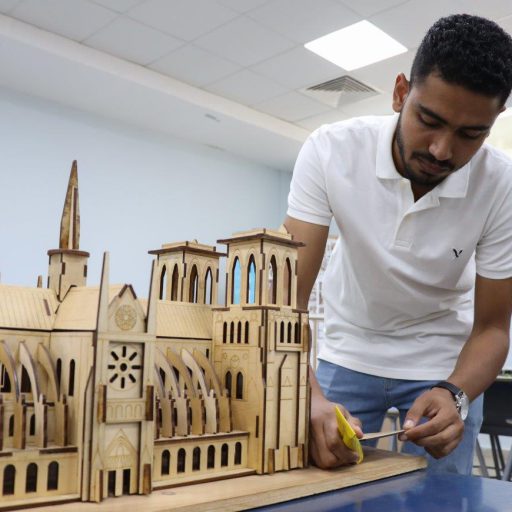
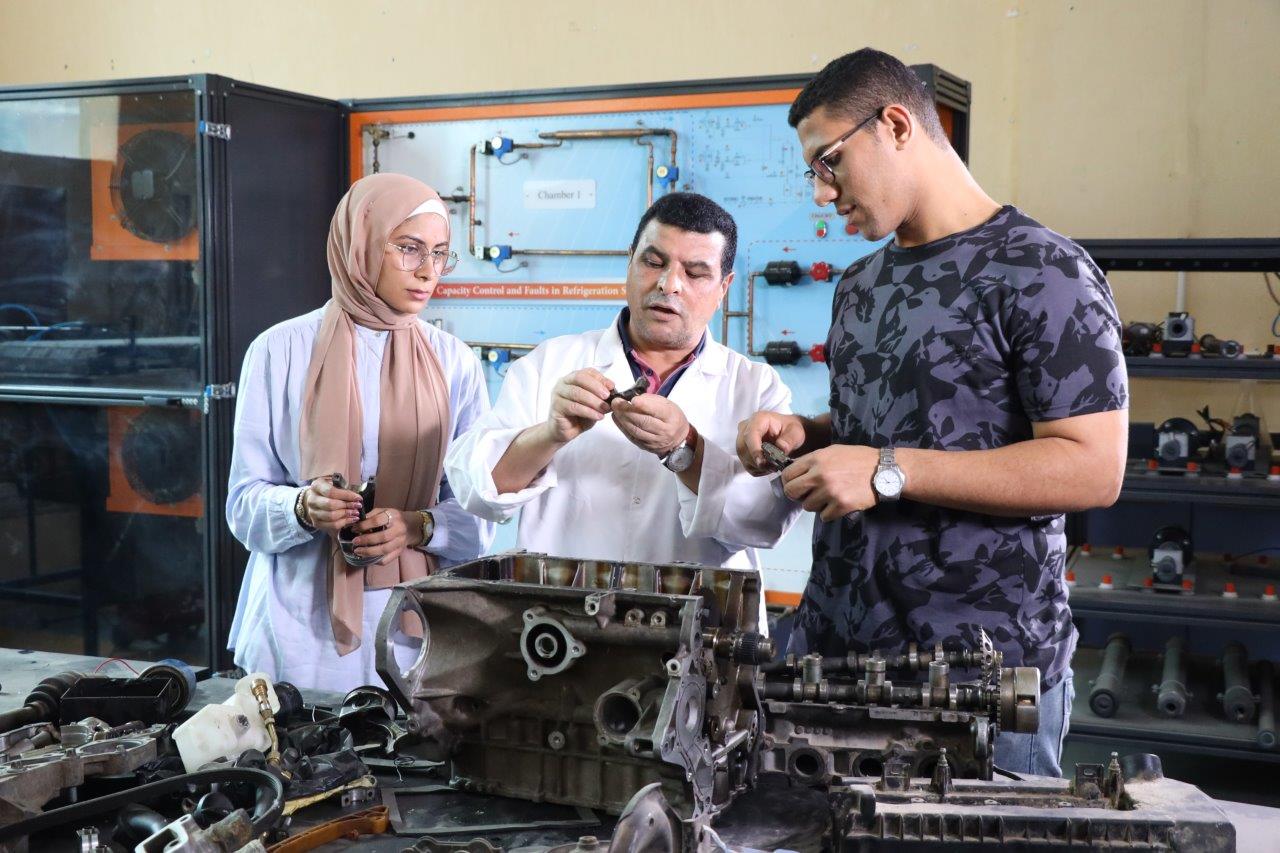
The School of Engineering and Technology’s vision is to present excellence and scientific leadership in the various fields of engineering. Therefore, we aim to provide the community with qualified graduates able to develop the country and lead its progress and prosperity, as well as capable of succeeding and competing locally, regionally, and internationally.
In our school, students are inspired and confident; they excel in self-learning, research, creativity, innovation, leadership, and entrepreneurship. Moreover, we are keen on providing quality educational service that satisfies national and international reference standards for quality assurance of education.
Meet the Vice Dean
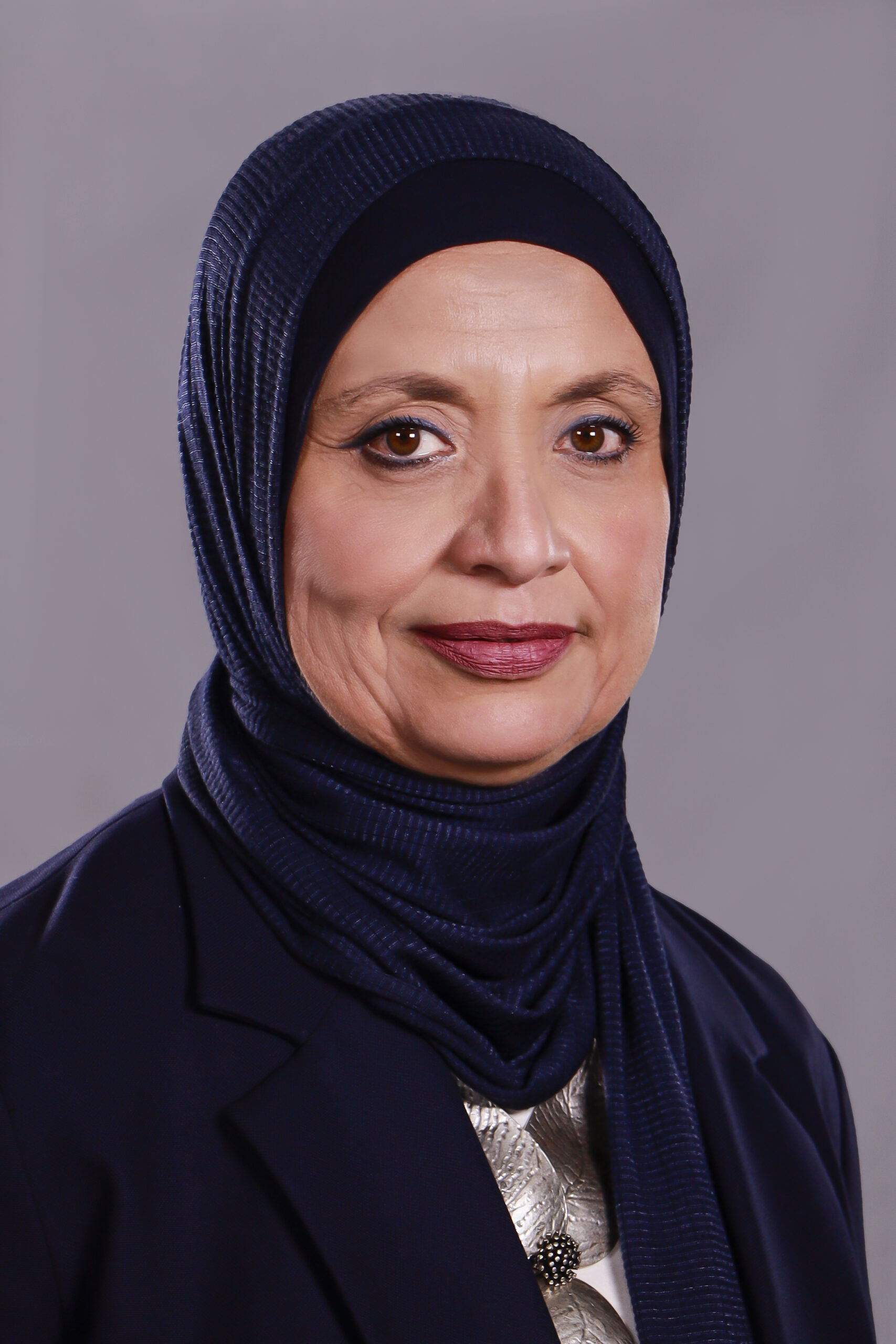
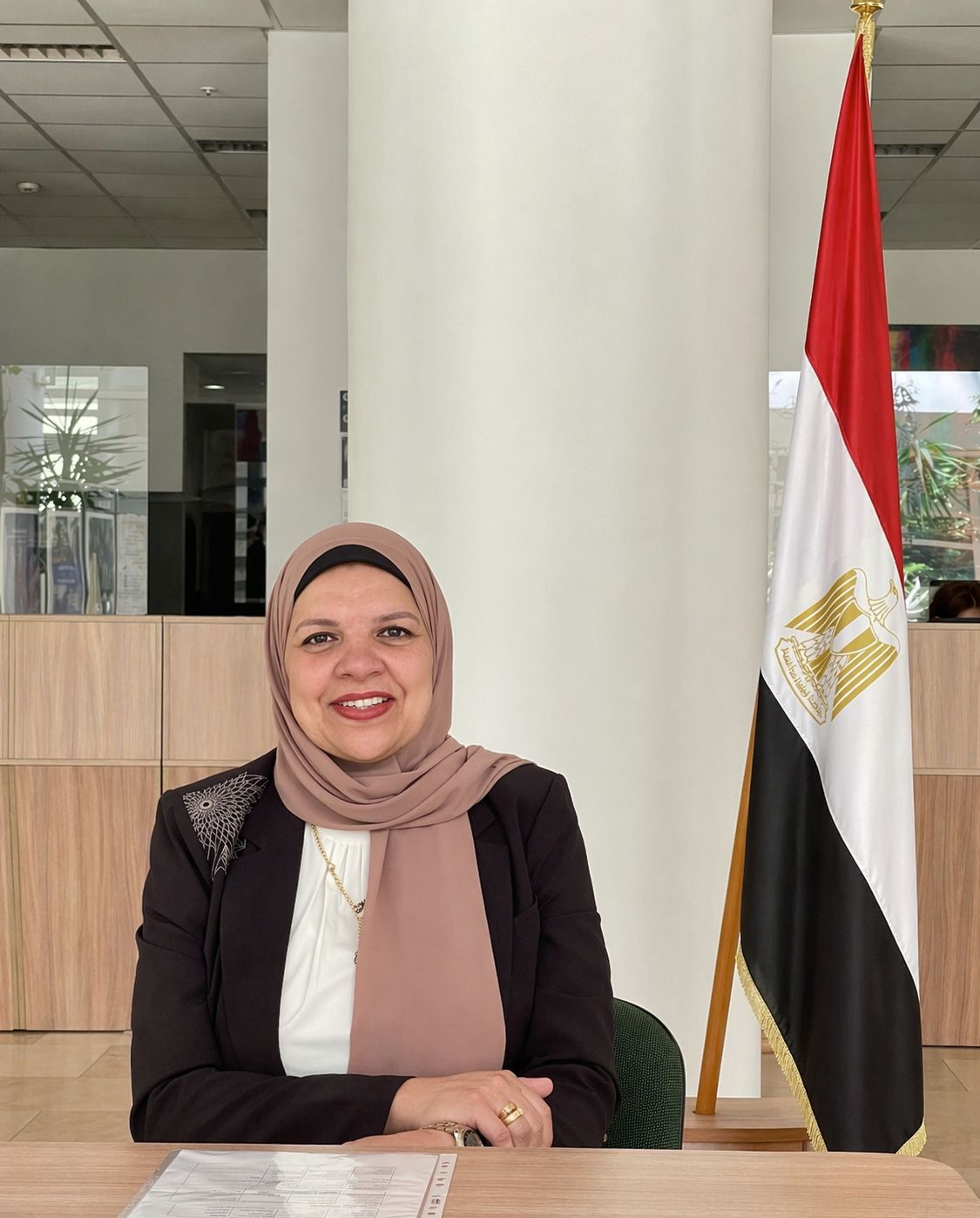
Prof. Dr. Dalia Bahaa El-din Hamdy
Prof. Dalia Bahaa El-din Hamdy is a professor of Geotechnical Engineering and the current Vice Dean for Education and Student Affairs at the Faculty of Engineering and Technology at Badr University in Cairo (BUC). She has also held significant leadership roles, including serving as the former Head of the Civil Engineering Department at BUC and as an Associate Professor of Geotechnical Engineering at the Faculty of Engineering at Mataria, Helwan University. Prof. Dalia earned her B.Sc. in Civil Engineering from Ain Shams University in 1990, followed by an M.Sc. in Geotechnical Engineering from Helwan University in 1994. In 1998, she received her Ph.D. in Geotechnical Engineering from Helwan University. In 2007, she was promoted to the rank of Associate Professor. With a wealth of experience in both academia and industry, Prof. Dalia has worked as a part-time Associate Professor at several prestigious institutions, including Badr University in Cairo (BUC) from 2015 to 2018. Her research contributions include more than 18 publications in Geotechnical Engineering, and she is a member of both the Egyptian Society of Geotechnical Engineering and the International Society of Geotechnical Engineering. Prof. Dalia also serves as an editor for the international journal Innovative Infrastructure Solutions. Her commitment to educational innovation is evident through her participation in a higher education enhancement project that involved converting the “Fundamentals of Soil Mechanics” course at the Civil Engineering Department into an electronic format. With over 30 years of experience, Prof. Dalia is recognized for her substantial contributions to Geotechnical Engineering through her work in technical consulting, as well as in soil testing for both postgraduate research and industrial projects.
Dean’s Word
Professor Aref Mohamed Ahmed Soliman
Dean’s Word
Professor Aref Mohamed Ahmed Soliman
Dear students of the School of Engineering and Technology-Badr University in Cairo,
As we begin the new academic year, I am pleased to welcome you to this prestigious engineering edifice. The college offers distinguished engineering programs that keep pace with global development and are compatible with the needs of the labor market. This is to serve the community in a way that achieves competitiveness locally, regionally, and internationally, in addition to active contributions to the major national projects that Egypt is currently initiating. Our students are trained by visiting field visits to most of the country’s major projects for information and field training; to increase the acquisition of practical experience and to simulate engineering work on the ground. We make sure to use modern techniques in our school by applying educational technology and teaching styles that depend on understanding and self-learning.
The school is reinforced with a distinct group of highly experienced faculty members who possess the knowledge of engineering and technological sciences which enable them to enable and empower the skills of our dear students.
We have confidence in you: that you are qualified to utilize your abilities and take responsibility. The school supports and invites all students to engage in different student activities in various fields.
Likewise, the school contributes to serving the community and the surrounding environment and pays attention to small industries and entrepreneurs, which has a positive impact on the school, university, and society. Finally, I wish you achieve more success and have more seriousness and stamina to preserve it. The bright future is all yours.
Strategy
our Vision
our Mission
Object- ives
School of ENGINEERING & TECHNOLOGY
Council
Assoc. Prof. Dalia Bahaa El Din Hamdy
Vice-Dean for Student Affairs
Prof. Mohamed Mahdy Marzouk
Vice-Dean for Graduate Studies and Research
Dr. Sohair Abdelfattah Ghoniem
Director of Quality Assurance Unit
Prof. Dalia Mohammad Elsheikh
Head of Electrical Department
Assoc. Prof. Gamal Mohamed Abdou
Head of Mechanical Department
Assoc. Prof. Wafaa Mohamed Kamal Rashwan
Head of Architectural Department
Assoc. Prof. Mohamed Khaled El-Sayed
Head of Civil Department
Assoc. Prof. Mohamed Sobhy Atalla
Head of Basic Science Department
Prof. Rada Ahmed Afify
Director of Environmental Development and Society Affairs Unit
Prof. Dr. Ahmed Mossa Abdel Rahman
Professor - Civil Engineering Department
Assoc. Prof. Nashat Mohamed Hussain
Coordinator of Computer Engineering and Systems Program
Assoc. Prof. Ahmed Ehab Abdel Hamid
Deputy Director of Quality Assurance Unit
Dr. Rana Mohamed Abdel Motaleb
Faculty Academic Advisor
Eng. Ahmed Hamd Abdel-Aleem
Representative of Teaching Assistants of School Council (2024/2025)
School premises
The Faculty of Engineering and Technology Complex is composed of 5 floors, centrally air-conditioner, the area of each floor is about 4200 m2. Total area of all floors = 21,000 m2.
This building includes:
- Many Lecture Halls, laboratories, workshops, and classes sufficient for the number of students shown from the calculation of student capacity. Each of classrooms is well equipped with comfort seats, a whiteboard, a data show device, a display screen, a microphone, Wi-Fi, and central air conditioning.
- All rooms of the faculty administration, faculty members and the teaching assistant staff
- 3 elevators are provided with two elevators for students and one for faculty members and teaching assistant staff).
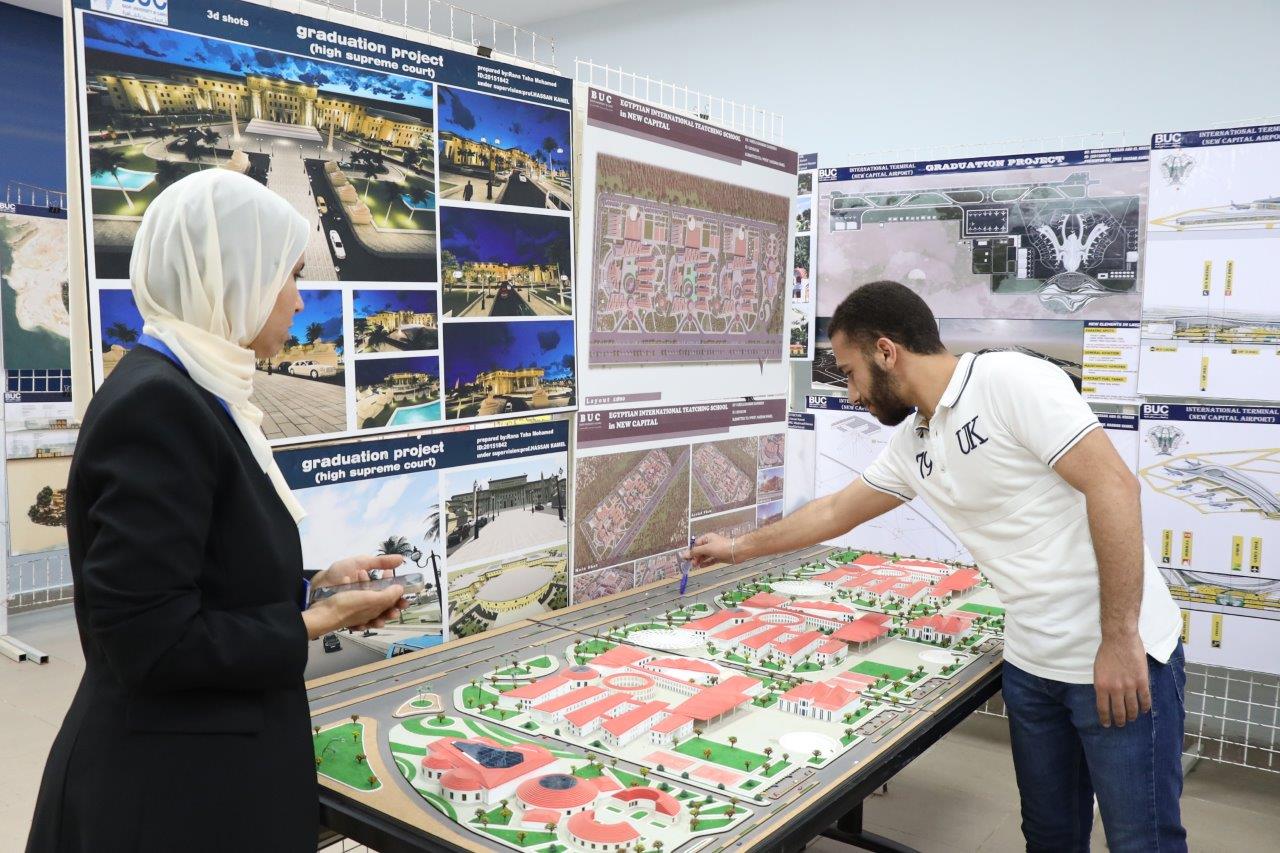
- Places for open exhibitions of student projects in the loopy and every floors.
- The library at Faculty of Engineering and the Campus central library, include large number of up-to-date engineering books and publications set out in a relaxing environment, conducive to studying. There are comfortable seating areas, group study areas, a quiet study area and private study rooms.
- In addition, there are central halls and stands at the university that can be used when necessary, and they are all equipped for cultural, artistic and sports activities.
- The university offers a learning management system (LMS) that support communication between students and faculty members. Through LMS, students can submit assignment, solve online quizzes, download all course materials, and for follow up the status of their attendance.
- The university has different healthcare facilities that are equipped with a variety medical equipment. These healthcare facilities include (general clinics, dental care clinics, and physiotherapy clinic).
- There is a diverse food court which has groceries, restaurants, and coffee shops that offer all kinds of food, as well as cold and hot drinks. In addition, the university has a central copy center, a bank branch and several of ATM Machines, and flower shop.
Faculty distinguished features
LABORATORIES
& WORKSHOPS
| # | Laboratory Name | Student Capacity | Laboratory’s Objectives |
| 1 | Geotechnical Engineering Lab. | 30 students | · Fully equipped with apparatus for testing all index, physical, and mechanical properties of soil both in laboratory and field measurements, which serves the geotechnical purposes. · Students are trained to use all apparatus carefully and safely to obtain precise results. They are also trained to analyze and discuss these results to help in proper decision making. · As part of community services, testing for consultancy purposes is performed in the lab. |
| 2 | Highway Lab. | 30 students | · The Highway Engineering Laboratory is a teaching and research laboratory equipped to conduct standard tests for asphalt pavement design and paving materials for undergraduate teaching as well as advanced research-oriented experiments for assessing the engineering properties and behaviors of new paving materials. · the laboratory provides all the technical work and services including laboratory testing, field testing, training, and technical consultation in the areas of The laboratory has the capabilities to conduct a wide range of laboratory and field tests. |
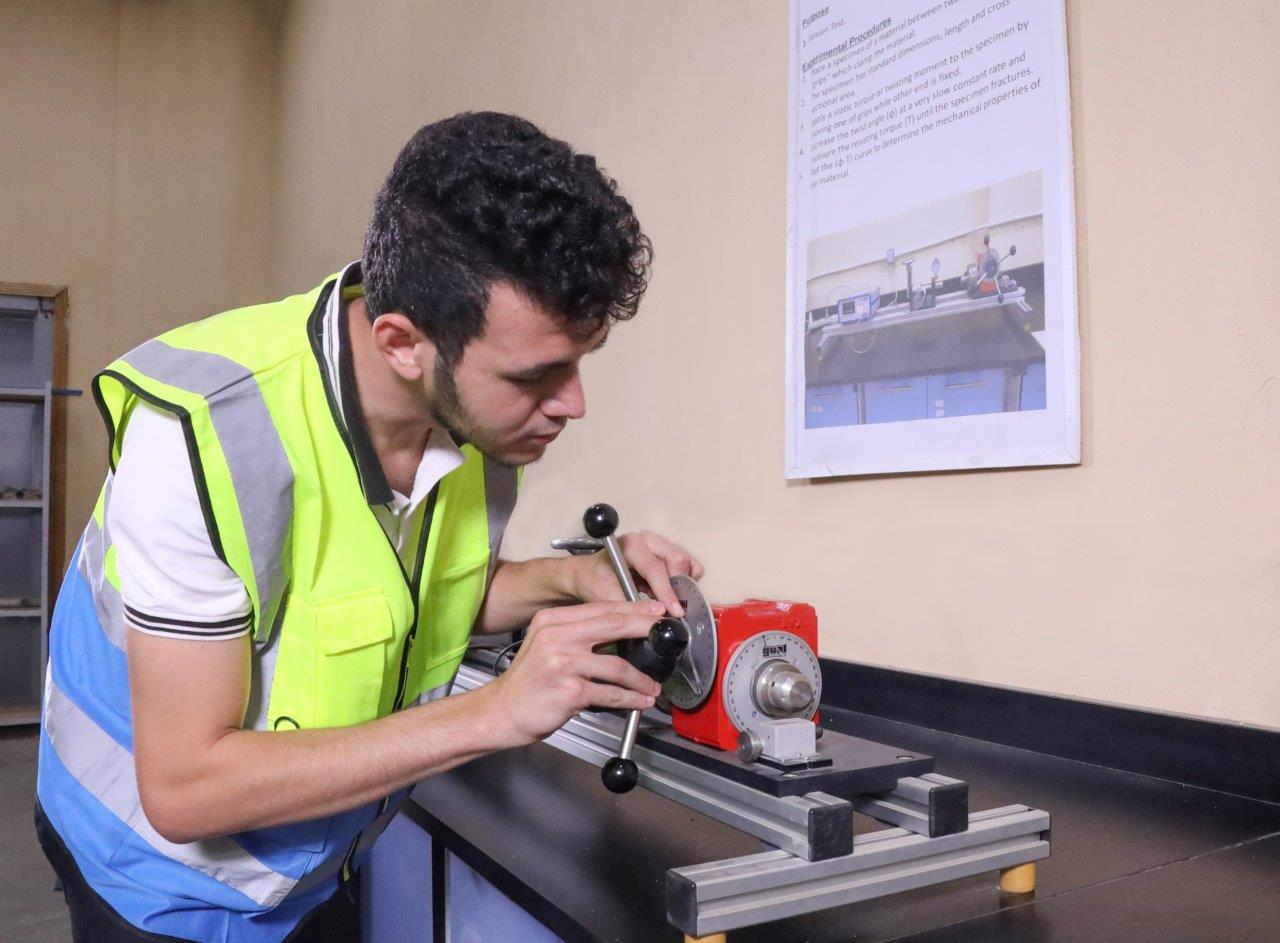
| 3 | Strength of Materials Lab. | 30 students | · The objective of laboratory is to demonstrate the basic principles in the area of strength and mechanics of materials and structural analysis to the undergraduate students through a series of experiments. · The laboratory offers teaching and research opportunities for students, faculty, and consultancy purposes. · The laboratory area is 148 m2, including several mechanical properties testing machines such as: universal testing machine, multipurpose hardness, impact, fatigue, and torsion testing. In addition, hardened concrete destructive and non-destructive tests. |
| 4 | Reinforced Concrete Lab. | 30 students | · The objective of laboratory is to conduct experimental tests concerning scientific research in the field of reinforced concrete. · This laboratory helps students to acquire skills related to courses of designing reinforced concrete structures. Students will be also able to use concrete testing machines: Compression Machine, Diamond Core Drill Comprising, Concrete Mixer, and Vibrating Poker. |
| 5 | Surveying Lab. | 30 students | · The surveying laboratory is equipped with many important surveying devices such as tapes for measuring distances, level devices for calculating point levels, theodolites for measuring horizontal and vertical angles, and total station devices for measuring all the above, as well as calculating the coordinates of points. · Students will be able to: – Use modern electronic surveying equipment in surveying work. – Practice Surveying and setting out works. – Draw topographic and detailed maps. · The laboratory is willing to offer all aforementioned devices for surveying works as part of community services. |
| 6 | Structures Lab. | 30 students | · The structural Analysis laboratory gives a much better understanding of different ‘structures’ behavior when loaded with various loading conditions. · The apparatus in the lab covers the evaluation of internal forces, and corresponding deflections in different structures through problem-solving sessions and laboratory activities. |
| 7 | Fluid Mechanics and Hydraulics Lab. | 30 students | · Fluid Mechanics and Hydraulics Laboratory runs in conjunction with the theory courses CVL 371 Fluid Mechanics and Hydraulics · This lab helps students to acquire some skills, such as measuring flow rate in pipes, in open channels, over different types of weirs, and out of the orifice. · Students will be also able to: (1) measure the velocity and pressure variations along different fittings on the fluid path. (2) Measure coefficient of discharge for venturi, weir, and orifice. (3) measure force acting on floating body, curved and plane surfaces, and partially submerged or fully submerged surfaces. (4) measure friction losses in pipes. (5) Judge the type of flow in pipes (laminar, transition, or turbulent); and calculate/measure pressure inside a fluid system. |
| # | Laboratory Name | Student Capacity | Laboratory’s Objectives |
| 1 | Environmental Measurements Lab. | 30 | Room: 328 Area: 50 m2 Programs Served: Architecture lab Course Served: ● ARE 251: Introduction to environmental science. ● ARE 353: Acoustics and Daylighting in Buildings. ● ARE 352: Principles of Sustainable Architecture. ● ARE 444: Simulation of Building Performance. |
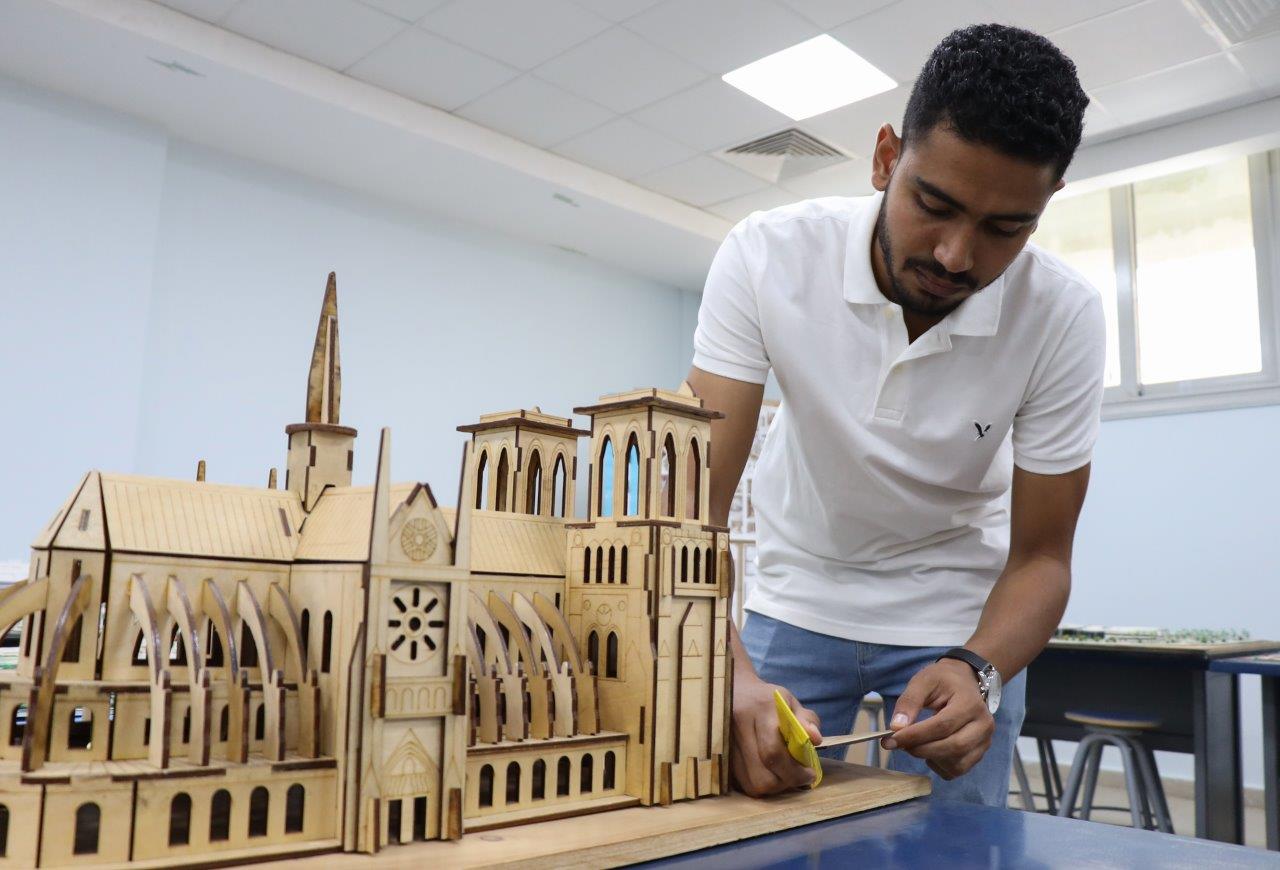
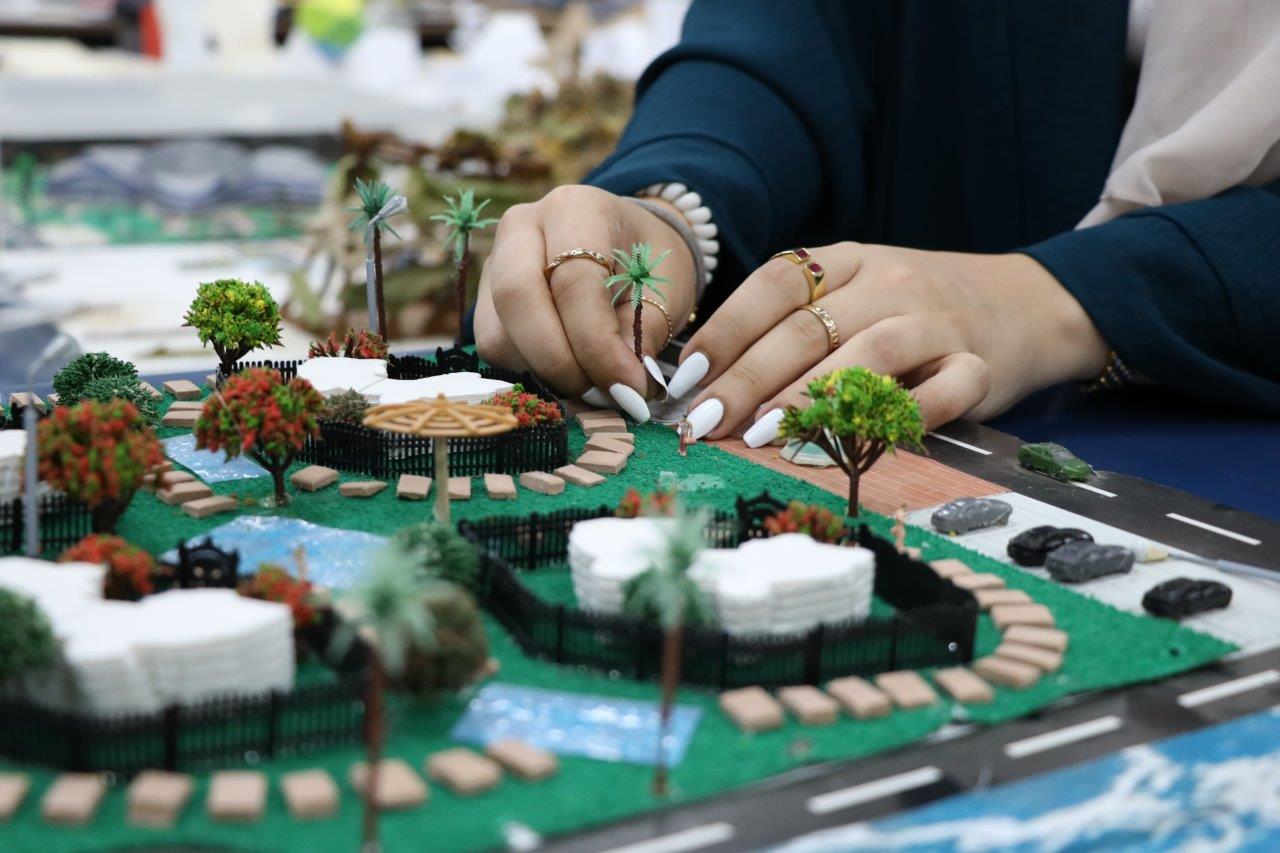
| 2 | Architectural Models Lab. | 30 | Room: 328 Area: 50 m2 Programs Served: Architecture Modeling Course Served: ● ARE 112: Architectural Drawings and Techniques. ● ARE 114: Architectural Design Studio (1). ● ARE 215: Architectural Design Studio (2). ● ARE 216: Architectural Design Studio (3). ● ARE 317: Architectural Design Studio (4). ● ARE 318: Architectural Design Studio (5). ● ARE 419: Architectural Design Studio (6). ● ARE 471: Graduation Project (1). ● ARE 472: Graduation Project (2). |
| 3 | Architectural Gallery | 30 | Room: 310 Area: 50 m2 Programs Served: Architecture Modeling Course Served: ● ARE 112: Architectural Drawings and Techniques. ● ARE 114: Architectural Design Studio (1). ● ARE 215: Architectural Design Studio (2). ● ARE 216: Architectural Design Studio (3). ● ARE 317: Architectural Design Studio (4). ● ARE 318: Architectural Design Studio (5). ● ARE 419: Architectural Design Studio (6). ● ARE 471: Graduation Project (1). ● ARE 472: Graduation Project (2). |
| # | Laboratory Name | Student Capacity | Laboratory’s Objectives |
| 1 | Fluid Lab. | 30 | Room: 001 Area: 179 m2 Programs Served: Energy, Mechatronics, Civil Courses Served: ● BAS 022 : Physics (2) ● MEC 121 : Fluid Mechanics ● MEC 251 : Fluid Dynamics ● CIV 171 : Fluid Mechanics ● CIV 264 : Principles of Hydraulics |
| 2 | Hydraulic Power Lab. | 30 students | Room: 001 Area: 179 m2 Programs Served: Energy, Mechatronics Courses Served: ● MEC 121 : Fluid Mechanics ● MEC 251 : Fluid Dynamics ● CIV 171 : Fluid Mechanics ● CIV 264 : Principles of Hydraulics |
| 3 | Combustion Lab | 36 students | Room: 002 Area: 179 m2 Programs Served: Energy, Mechatronics Courses Served: ● MEC 336 Combustion Technology ● MEC 342 Internal Combustion Engines |
| 4 | Internal Combustion Lab. | 30 students | Room: 002 Area: 179 m2 Programs Served: Energy, Mechatronics Courses Served: ● MEC 336 Combustion Technology ● MEC 342 Internal Combustion Engines |
| 5 | Air Conditioning Lab | 25 students | Room: 003 Area: 60 m2 Programs Served: Energy, Mechatronics Course Served: ● MEC 222 Heat Transfer ● MEC 111 Thermodynamic |
| 6 | Heat Transfer Lab | 30 students | Room: 111 Area: 117 m2 Programs Served: Energy, Mechatronics Course Served: ● MEC 222 Heat Transfer ● MEC 111 Thermodynamic |
| 7 | Thermodynamics Lab | 30 students | Room: 011 Area: 60 m2 Programs Served: Basic, Energy, Mechatronics Course Served: ● MEC 222 Heat Transfer ● MEC 111 Thermodynamic |
| 8 | Electrical and Electronic Lab | 25 students | Room: 219 Area: 65 m2 Programs Served: Energy, Mechatronics, Computer Communications Course Served: ● ELE 111: Electrical Circuit 1 ● ECO 221: Electronic Devices ● COM 122: Logic Design ● ECO 242: Electronic Circuits 1 ● ECO 343: Electronic Circuits 2 |
| 9 | Robotics Lab | 30 students | Room: 220 Area: 103 m2 Programs Served: Energy, Mechatronics, Communication, Computers Course Served: ● MEC 221: Principles of Mechanics ● MEC 233: Control. ● MEC 341: Dynamics and Kinematics of Machine. ● MEC 461: Auto mechanics. ● MEC 345: Robotics. |
| 10 | Engineering Measurements Lab | 25 students | Room: 222 Area: 133 m2 Programs Served: Energy, Mechatronics Courses Served: ● ELE 112 Electrical Measurements ● MEC 252 Engineering Measurements |
| 11 | Microprocessor Lab | 25 students | Room: 221 Area: 103 m2 Programs Served: Energy, Mechatronics, Computer, Communications Course Served: ● MEC 221 : Principles of Mechatronics ● COM 122 : Logical Design ● COM 244 : Microcontrollers ● ECO 384 : Microprocessors ● ELE 333 : Automated Systems Based Microprocessors |
| 12 | Computer Lab | 25 students | Room: 227, 318, 216, and 114 Area: 87 – 103 m2 Programs Served: Energy, Mechatronics, Computer Communication Course Served: ● ELE 111: Digital signal processing ● ECO 221: Signal and systems ● COM 122: Software engineering 1 ● ECO 242: Software engineering 2 ● ECO 343: Algorithms ● Programming 2 ● Computer network 1 ● Computer network 2 ● Data base 1 ● Data base 2 |
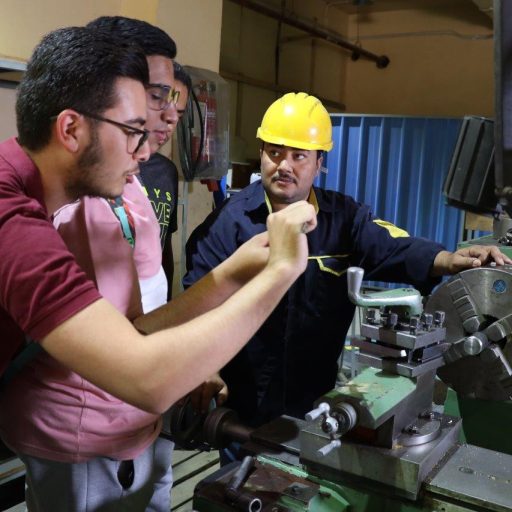
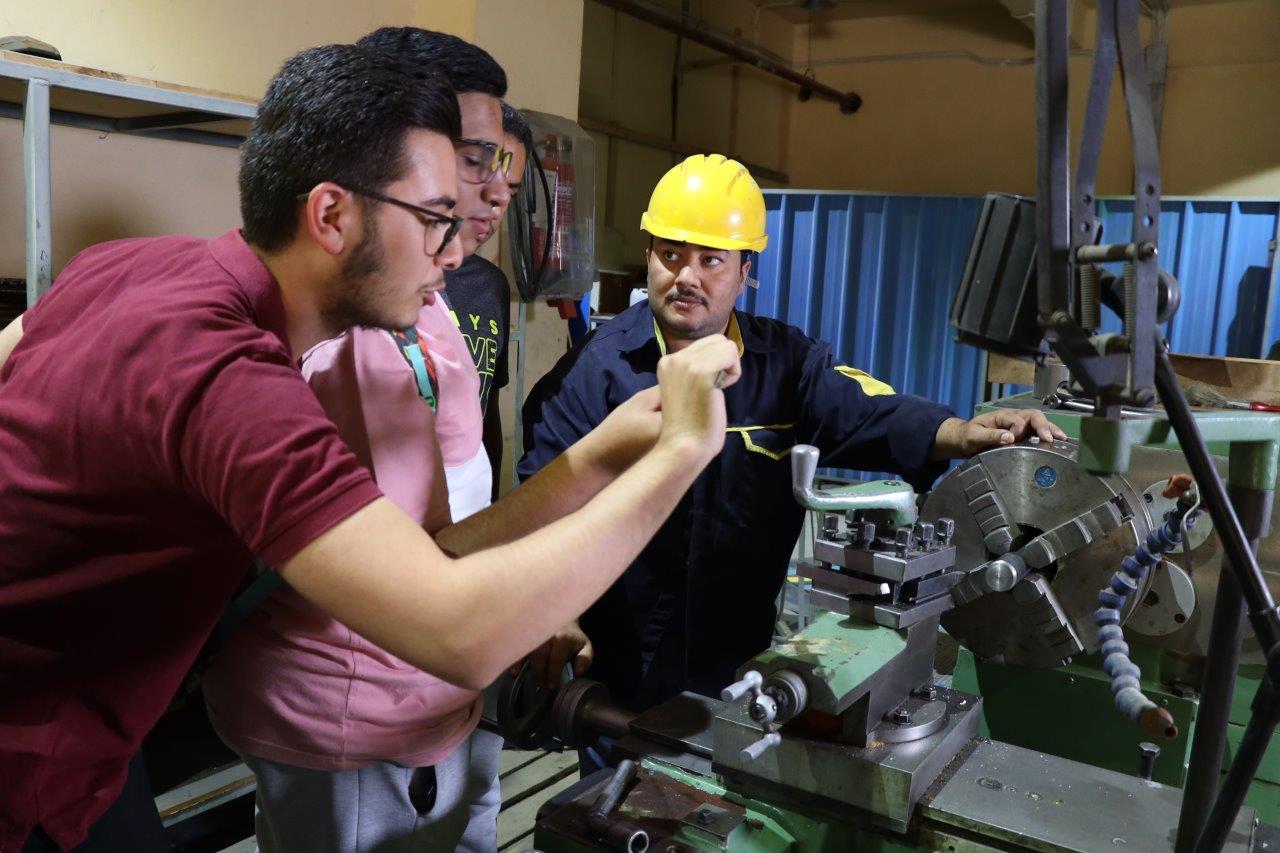
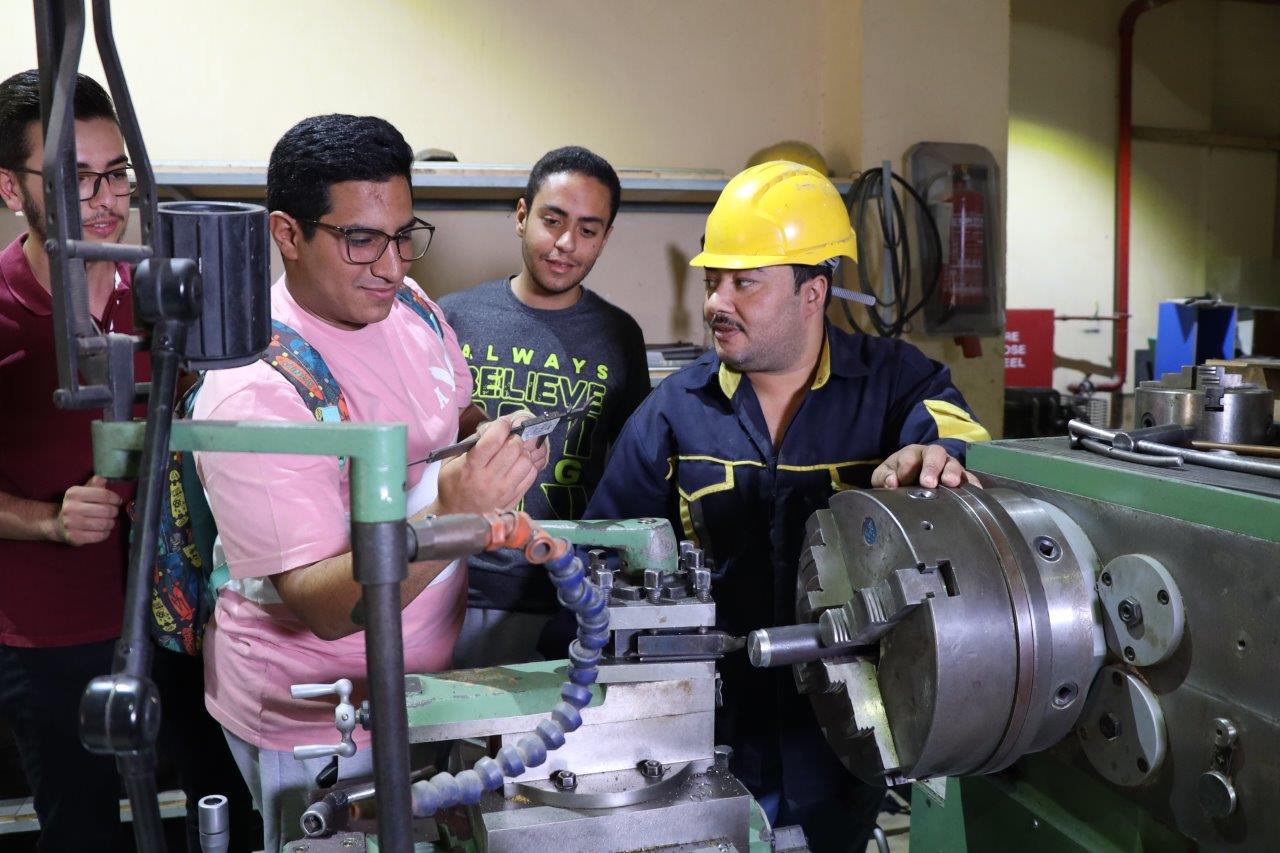
| 13 | Mechanical Workshop | 25 students | · To understand the construction and operation of different metal forming machines (center lath, milling, shaping, grinding, drilling ,and cutting saws · To know how to select the suitable machine and the cutting tool for producing any part. · Describe the technological procedure to produce cylindrical, conical, and flat surfaces using single point cutting tools or multi point cutting tools It also produces screw threads. · To identify the different techniques for non-cutting shaping forging, rolling, sheet metal forming, and welding |
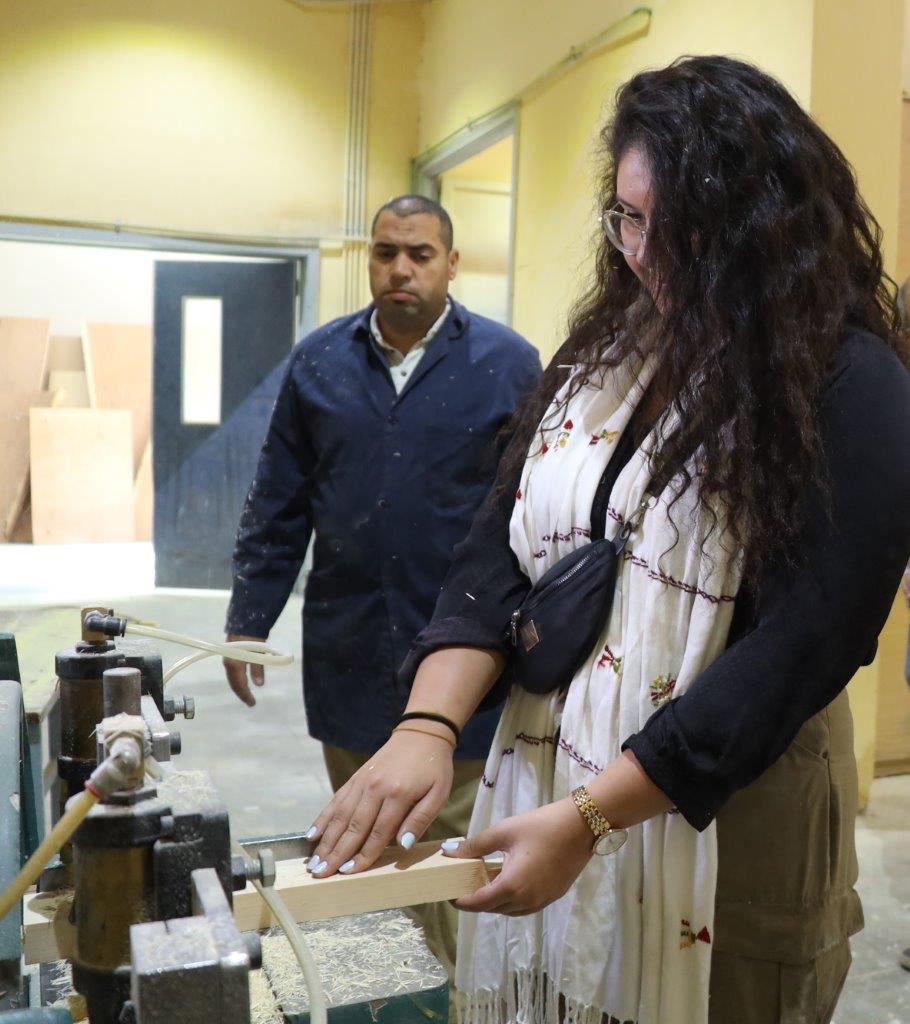
| 14 | Carpentry workshop | 25 students | · To explain the different metal of wood cutting, forming, connecting, assembly, and finishing · To demonstrate the type and characteristics of wood forming machines, and the way for producing complex wooden products. · Wood decoration skills |
# | Laboratory Name | Student Capacity | Laboratory’s Objectives |
1 | Fluid Lab | 30 students | · To Study the flow through circular pipes. · To find experimentally the relation between the friction factor, head loss, and Reynolds number. · To determine the loss coefficient for sudden contraction and sudden enlargement. · To determine the Venturi meter coefficient of discharge. · To study the dependence of this discharge coefficient and the recovery ratio of the flow Reynolds number · To determine the force produced by a water jet when it strikes different types of surfaces. · To investigate the discharge-head characteristics of rectangular and triangular weirs. |
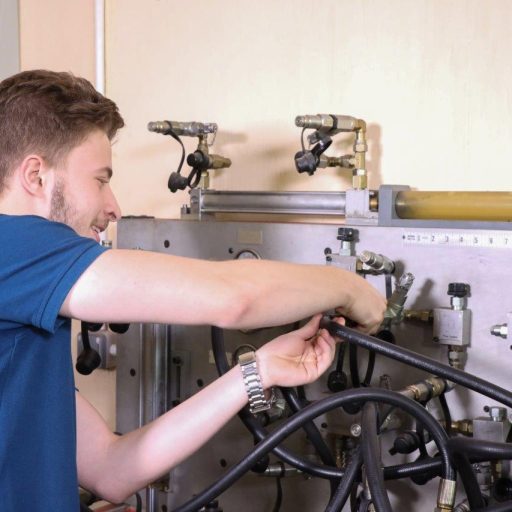
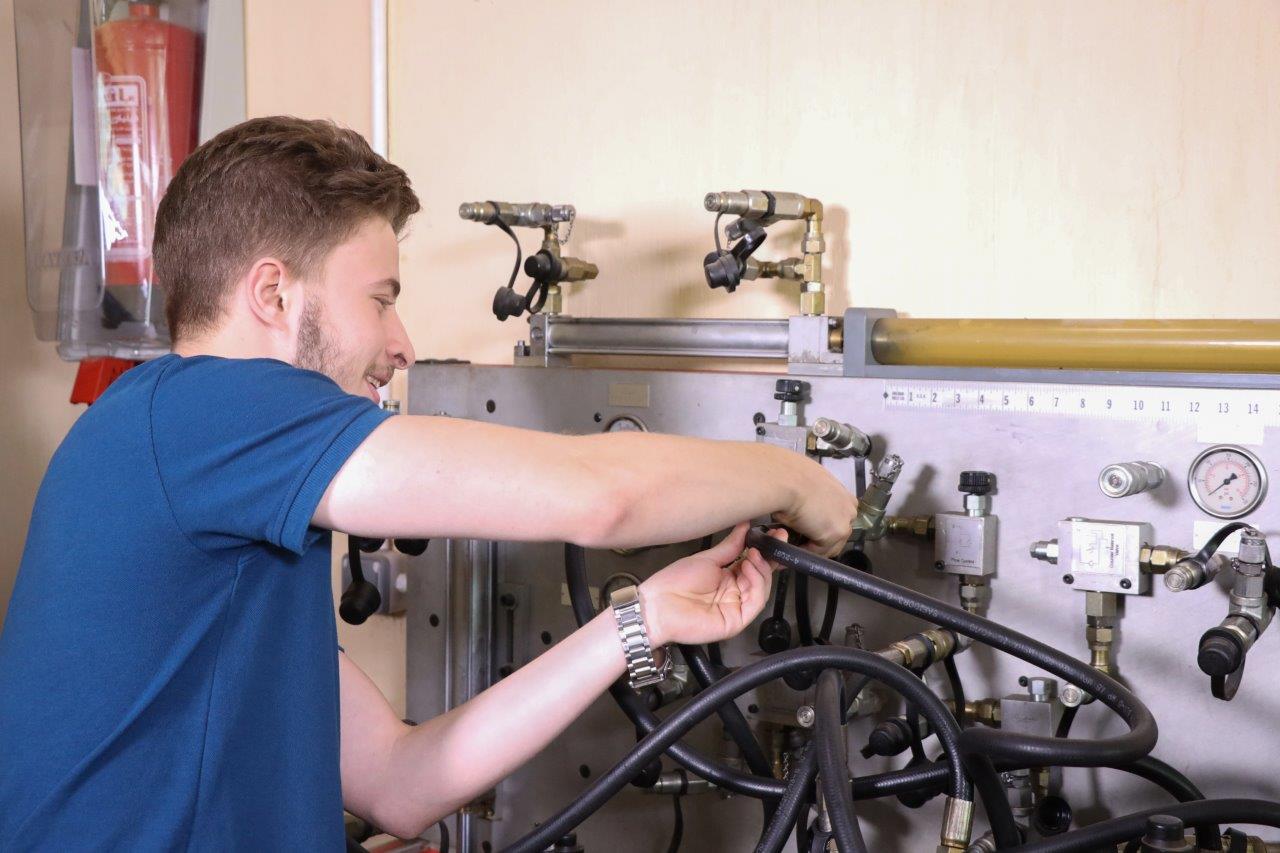
2 | Hydraulic Power Lab. | 30 students | · Explain the construction of the hydraulic power system (power pack, pump, actuators, valves, cooling, piping, and measuring devices) · Exercise the building up of several designs of hydraulic power systems · Carry out simple flow, force, and speed-measuring procedures |
3 | Combustion Lab | 36 students | · To determine the efficiency of combustion for various types of gaseous and liquid fuels. · Introduce the different parts of internal combustion engine to students. |
4 | Internal Combustion Lab. | 30 students | · Introduce the different parts of internal combustion engine to students. |
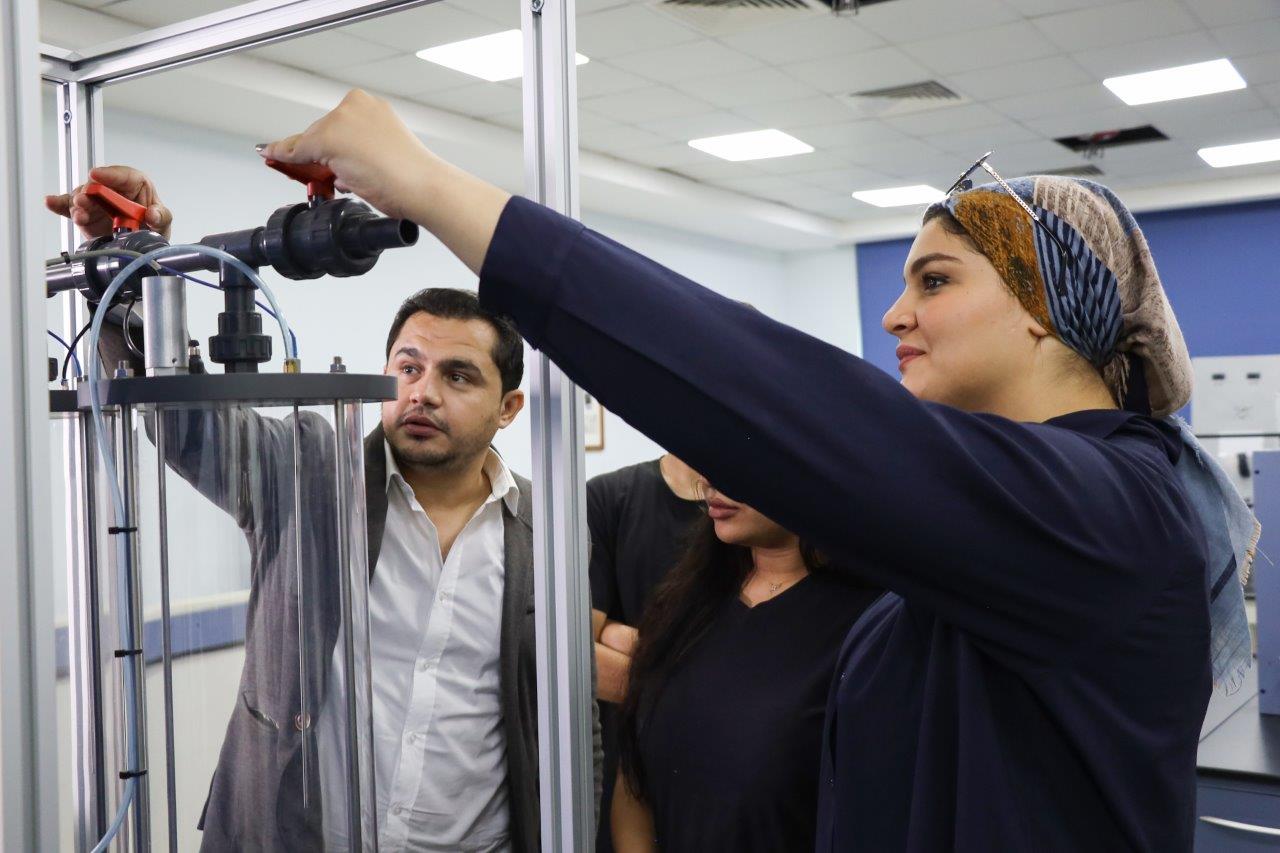
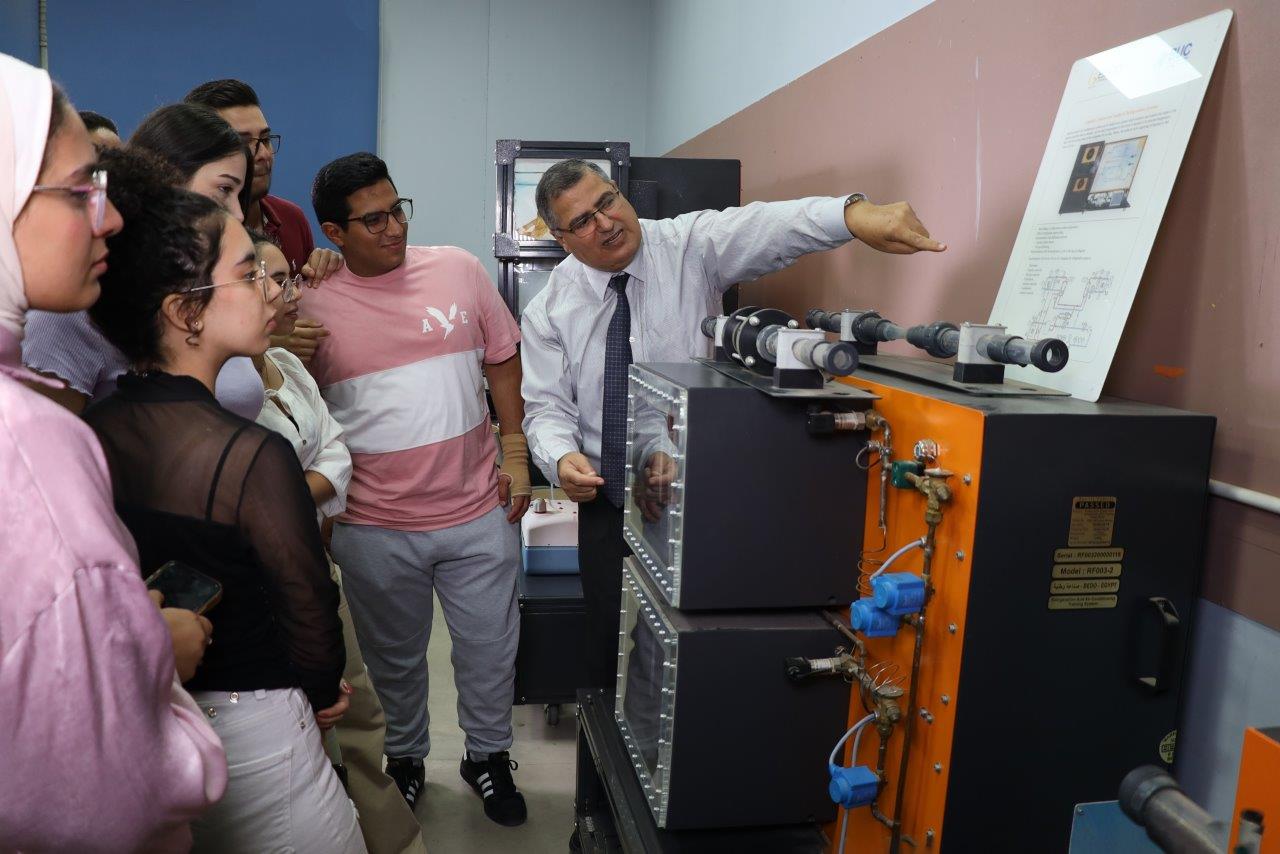
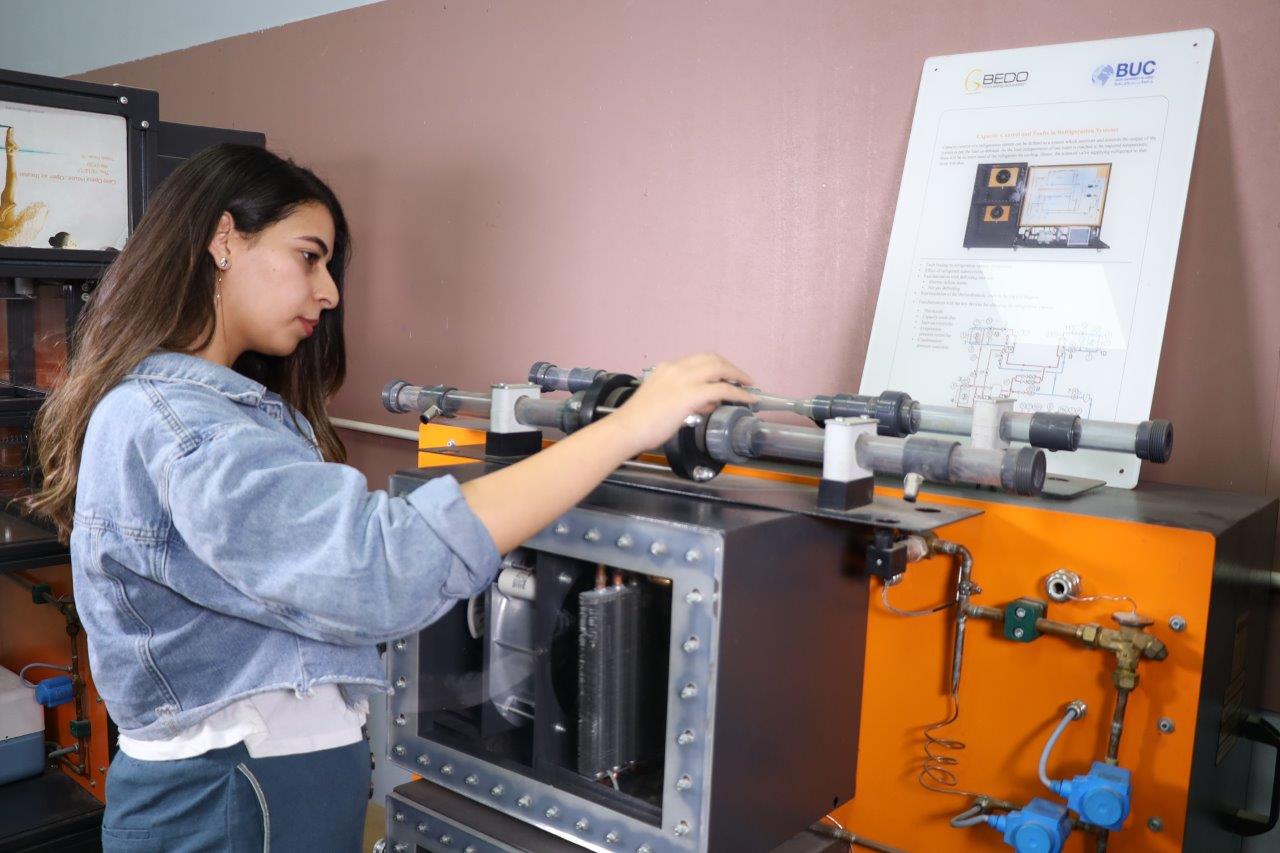
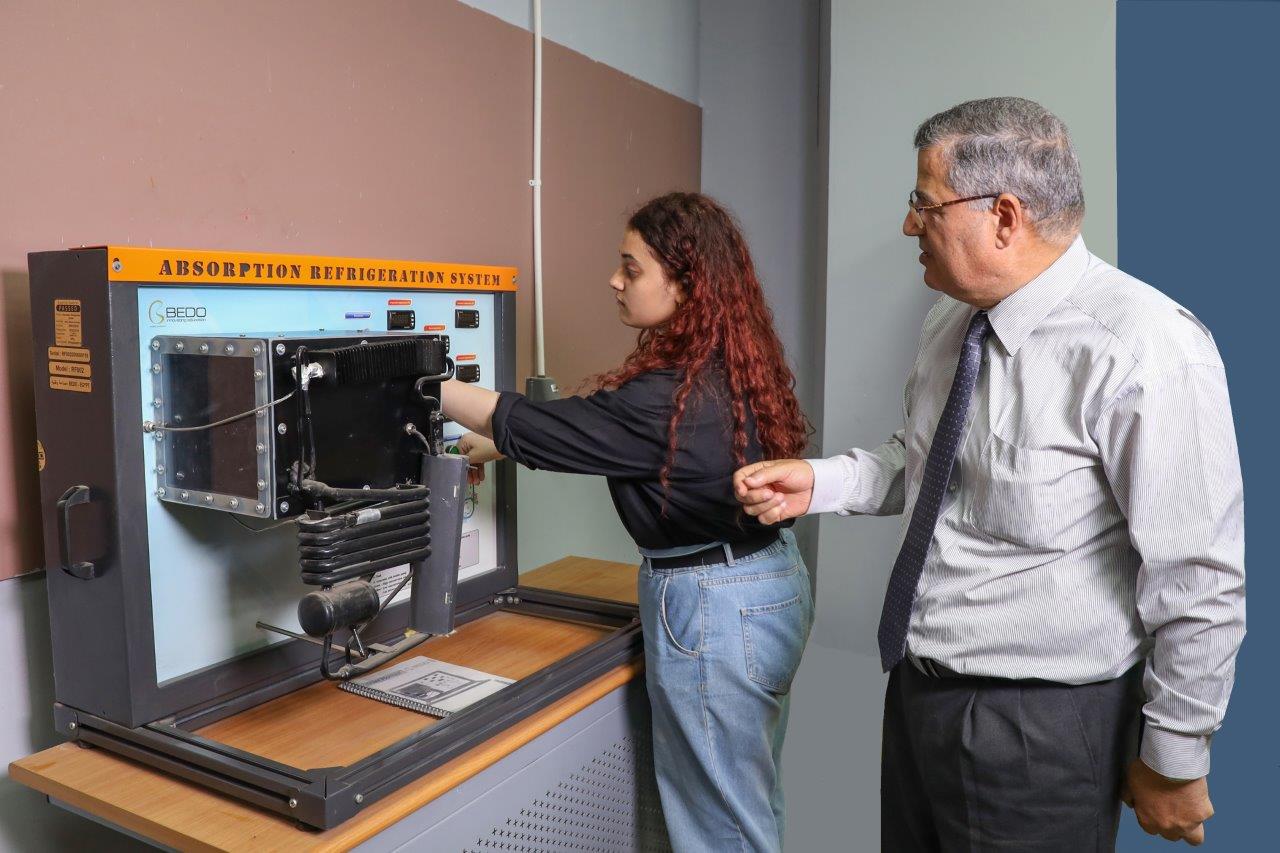
5 | Air Conditioning Lab | 25 students | · The educational unit examines a refrigeration circuit under an adjustable load. · Absorption refrigeration systems operate using thermal energy. They use the principle of liquids evaporating already at low temperatures when pressure is reduced. · The base unit is, dependent on the objective of the experiment, extended into a complete refrigeration circuit with one of the models available as accessories such as the refrigerator, the refrigeration system with refrigeration and freezing stage, the simple air conditioning system, and air conditioning. · In conjunction with the Refrigerator model, Model of a refrigeration system with refrigeration and freezing stage, Model of a simple air conditioning system, Air conditioning model,
|
6 | Heat Transfer Lab | 30 students | · Introduces students to key scientific terms such as an experimental module to introduce students to the principles of linear heat conduction, and to allow the thermal conductivity of various materials to be measured. · Introduces students to key scientific terms such as Shows students an example of conduction combined with losses due to radiation and convection. · Introduces students to key scientific terms such as Objective & Description introduces students to key scientific terms such as- An experimental apparatus to examine free and forced convection from a flat plate, a plate with fins and a plate with rods. · Introduces students to key scientific terms such as: a benchtop unit to show the laws of radiant transfer from heat and light sources · Heat Radiation with Computer-Controlled Training system This educational unit offers basic experiments for targeted teaching on the topic of heat transfer by radiation
|
7 | Thermodynamics Lab | 30 students | · Introduce students to temperature, and how different techniques can be employed to measure this variable. · Demonstrates how the temperature of water behaves at its boiling point with variation in the absolute pressure. Saturation curves can be generated, and the quality of steam exiting the · Recycle Loop Unit Purpose: to understand the meaning of: – Water Recycle Loop. – Mass balances of steady state: – Mass balance in the recycle loop in stationary regime with different water proportions in recirculation and different loops. – Heat balances of unsteady state: – Determination of the recycle loop system response faced when the heating element is switched on, at different flow rates and different loops. – Determination of the recycle loop system response faced, when the heating element is switched off, at different flow rates and different loops apparatus can be determined |
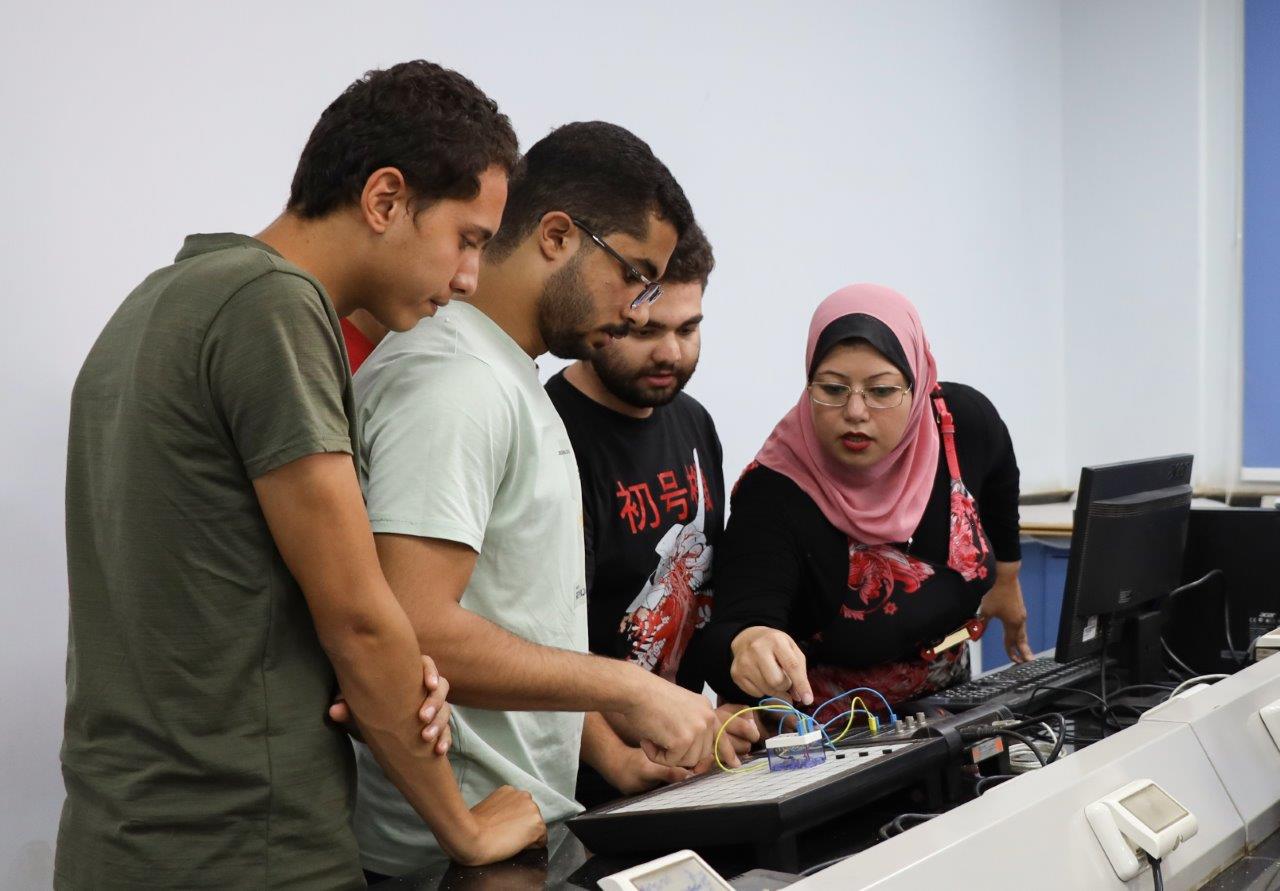
8 | Electrical and Electronic Lab | 25 students | · The Electronic Circuits Lab is a series of breadboard stations where students build various electronic circuits to study the theory behind the fundamental building blocks of electronic systems, such as resistors, capacitors, inductors, etc. · Improve students’ knowledge with programming software. · Train students on real electronic and electrical components in industry |
9 | Engineering Measurements Lab | 25 students | · Introduces students to the physical science of pressure, exploring the concepts of pressure, calibration, engineering units, errors and linearity using a Bourdon pressure gauge and pressure sensor connected to a dead weight pressure calibrator. |
10 | Solar Energy Lab | 25 students | · Find the total solar energy that hits the collector (incident energy) and compare it with the energy absorbed by the water. · Find the losses and efficiency of the collector. · Find the relationship between the efficiency and the water temperature. |
11 | Computer Lab | 25 students | · Help the student to use software packages (solid work, MATLAB, LABVIEW, for modelling and simulation of engineering systems, and for computer aided design. · The computer lab serves as the center for teaching computer use to whole classes, usually by a specialist computer teacher. |
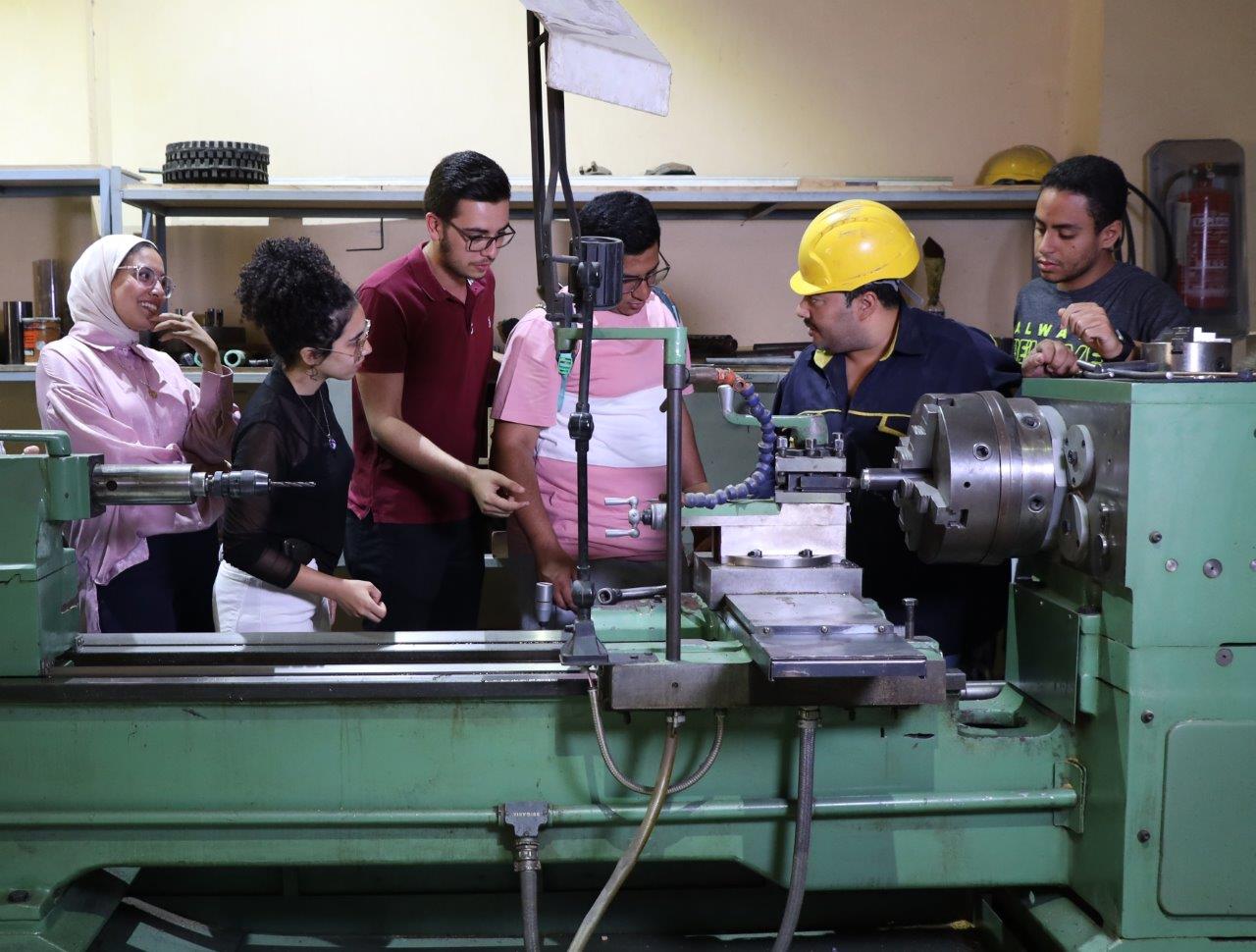
12 | Mechanical Workshop | 25 students | · To understand the construction and operation of different metal forming machines (center lath, milling, shaping, grinding, drilling, and cutting saws. · To know how to select the suitable machine and the cutting tool for producing any part. · Describe the technological procedure to produce cylindrical, conical, and flat surfaces using single point cutting tools or multi point cutting tools It also produces screw threads. · To identify the different techniques for non-cutting shaping forging, rolling, sheet metal forming, and welding |
13 | Carpentry workshop | 25 students | · To explain the different metal of wood cutting, forming, connecting, assembly, and finishing · To demonstrate the type and characteristics of wood forming machines, and the way for producing complex wooden products. · Wood decoration skills
|
# | Laboratory Name | Student Capacity | Laboratory’s Objectives |
1 | Transmission Lines LAB | 30 | · Study 2 Two-wire lines and Coax lines. · Study Four-wire lines · Study Optical information transmission · Assess the current/voltage characteristic of the sending LED. · Assess the current/power characteristic of the sender LED. · Investigate the occurrence of bending losses when fiber bending is severe. · Investigate longitudinal axis offset losses incurred at a fiber-to fiber joint · Investigate of data transmission over a fiber optic waveguide. · Comprehend practicing with different optical measurement techniques · Comprehend applying with different offset loss methods · Comprehend using fiber measurement techniques |
2 | Antenna Engineering LAB | 30 students | · Program Installation and Usage updates · Practice for Antenna characteristics · Practice for Dipole antenna · Practice for Yagi antenna · Practice for Mopole antenna · Practice for Loop antenna · Practice for Ceramic Chip antenna · Practice for Inverted F antenna · Practice for Patch and Patch array antenna · Practice for antenna Impedance Matching · Practice for antenna Gain measurement · Design and Manufacture of Dipole antenna · Design and Manufacture of Loop antenna · Design and Manufacture of Yagi antenna · Comprehend recognition of dipole antenna · Comprehend recognition of Yagi antenna · Comprehend recognition of Monopole antenna · Comprehend recognition of Loop antenna · Comprehend recognition of Ceramic Chip antenna · Comprehend recognition of F antenna |
3 | Microwave Circuits LAB | 30 students | · Familiarization with the unit · Study of different fixed attenuators · Calibrate of variable attenuators Wavelength and other devices · Calculate impedance, admittance and reflection coefficient · Study of the Broad-wall Waveguide Directional Coupler · Study of the Cross-guide Waveguide Directional Coupler · Measure of power emission in free space Measure of wavelength, frequency and SWR measurement in free space · Study radiation pattern of a horn antenna · Study of gain and directivity of a horn antenna (DBi) · Comprehend practicing measurements of different quantities. · Familiarizing oneself of the radiation techniques. · Practicing applying different techniques |
4 | Basic Electrical Engineering LAB | 30 students | · Read the resistors by colors · Draw curve between voltage and current through unknown resistance for knowing its value · Verify Kirchhoff’s voltage law · Verify Kirchhoff’s Current law · Verify Superposition Theorem · Verify Thevenin Theorem · Verify Diode Characteristics · Show output on diode and resistance using halfwave rectifier and full wave rectifier · Verify operating of Zener diode and how it works in reverse mode as a battery. · Verify operating Light emitting diodes (LED) · Verify Kirchhoff’s voltage law using series three resistances connecting with DC source. · Verify Kirchhoff’s current law using parallel three resistances connecting with DC source. · Verify diode characteristics. |
5 | Communication Systems LAB | 30 students | · Simulate and validate the various functional modules of a communication system · Demonstrate their knowledge in base band signaling schemes through implementation of digital modulation schemes · Apply various channel coding schemes and demonstrate their capabilities towards the improvement of the noise performance of communication system · Simulate end-to-end communication Link · Signal Sampling and reconstruction · Time Division Multiplexing · Pulse Code Modulation and Demodulation · Delta Modulation and Demodulation · Line coding schemes · Simulation of ASK, FSK, and BPSK generation schemes · Simulation of DPSK, QPSK and QAM generation schemes · Simulation of signal constellations of BPSK, QPSK, QAM · Simulation of ASK, FSK and BPSK detection schemes · Simulation of Linear Block and Cyclic error control coding. · Simulation of Convolutional coding scheme · Communication link simulation · Implement AM and FM modulation and demodulation |
6 | Transmission Lines LAB | 30 students | · Comprehend practicing with different optical measurement techniques · Comprehend applying with different offset loss methods · Comprehend using fiber measurement techniques · Study 2 Two-wire lines and Coax lines. · Study Four-wire lines · Study Optical information transmission · Assess the current/voltage characteristic of the sending LED. · Assess the current/power characteristic of the sender LED. · Investigate the occurrence of bending losses when fiber bending is severe. · Investigate longitudinal axis offset losses incurred at a fiber-to fiber joint · Investigate of data transmission over a fiber optic waveguide.
|
7 | Antenna Engineering LAB | 30 students | · Comprehend recognition of dipole antenna · Comprehend recognition of Yagi antenna · Comprehend recognition of Monopole antenna · Comprehend recognition of Loop antenna · Comprehend recognition of Ceramic Chip antenna · Comprehend recognition of F antenna · Comprehend recognition of Patch array antenna · Program Installation and Usage updates · Practice for Antenna characteristics · Practice for Dipole antenna · Practice for Yagi antenna · Practice for Mopole antenna · Practice for Loop antenna · Practice for Ceramic Chip antenna · Practice for Inverted F antenna · Practice for Patch and Patch array antenna · Practice for antenna Impedance Matching · Practice for antenna Gain measurement · Design and Manufacture of Dipole antenna · Design and Manufacture of Loop antenna · Design and Manufacture of Yagi antenna |
# | Laboratory Name | Student Capacity | Laboratory’s Objectives |
1 | Computer Programming Lab | 30 students | · Able to develop applications for a range of problems using object-oriented programming Techniques. · Learn object-oriented programming using C++ language. · Develop applications for a range of problems using object-oriented programming Techniques. · Introduces object-oriented programming concepts using the C++ language. • Introduces the principles of data abstraction, inheritance, and polymorphism. • Introduces the principles of virtual functions and polymorphism • Introduces handling formatted I/O and unformatted I/O • Introduces exception handling |
2 | Database System Lab | 30 | · Comprehend building database using SQL. · Build database applications. · Implement the basic knowledge of SQL queries. · Apply database models for different database applications. · Apply normalization techniques for refining databases. · Practice various triggers, procedures using PL/SQL. |
3 | Software System Lab | 30 students | · Comprehend LEX & YACC tools and/or C/C++/Java languages. · Comprehend implement memory management. · Apply Lexical (LEX) Analysis and Syntax (YACC) Analysis phases of Compiler Design a · Implement programs on these phases using LEX & YACC tools and/or C/C++/Java · Acquainted students with different types of CPU Hardwired and Microprograming techniques. · Acquainted students with different types of memory management – page replacement virtual memory. |
4 | Microprocessor & Microcontroller Lab | 30 students | · Execute variety of assembly language · Execute simple programs on 8051 micro controllers. · To develop and execute variety of assembly language programs of Intel 8086 including arithmetic and logical, sorting, searching, and string manipulation operations. · To develop and execute the assembly language programs for interfacing Intel 8086 with peripheral devices. · To develop and execute simple programs on 8051 micro controllers. · The student will learn hardware and software interaction and integration. |
5 | Embedded Systems | 30 students | · Acquaint himself/herself od designing and implementing complex energy efficient embedded systems. · Provide embedded system solutions for engineering problems. · Apply and Analyze usage of various on-chip resources like GPIO, Timers, Interrupts, ADC, DAC, Comparator, SPI. · Design embedded systems to the requirements. · Use industry techniques in the design of Microcontrollers. · Provide embedded system solutions of engineering problems. |
6 | Computer Network Lab | 30 | · Practice with networking components and devices. · Practice with Transmission media and tools. · Practice with UTP cable for cross and direct connection toots. · Practice with different router and Bridges and Switches. · Practice with the simulation tools. · Apply various LAN topologies and technology. · Configuration of TCP/IP protocols in Window/LINUX. · Configuration application Routers for access · Install and function with the packet tracer tools. · Configure TCP/IP protocols in Window/LINUX. · Apply different networks models and topology. |
7 | System Design Lab | 30 students | · Practice with Verilog and VHDL tools. · Apply logic building block using the tools · Apply building ALU using the tools · Apply building Sequential circuits using the tools · · Practice building combination and Sequential circuits · Design of counters using VHDL. · Apply the simulation tools in combinational and sequential circuits. |
8 | Computing Systems Security Lab | 30 students | · Implement the following substitution & transposition techniques. · Implement the following algorithms: DES, AES and RSA. · Apply secure data storage, secure data transmission and for creating digital signatures. · Perform wireless audit on an access point or a router and decrypt WEP and WPA. (Net Stumbler) · Demonstrate intrusion detection system (ids) using any tool · Perform wireless audit on an access point or a router and decrypt WEP and WPA. · Practice with the honey pot and monitor the honeypot on network
|
9 | Artificial Intelligence Lab | 30 students | · Implement and the FIND-Algorithm for finding the most specific hypothesis based on a given set of training data samples. · Implement and demonstrate the Candidate-Elimination algorithm and practice with its applications. · Construct programs to demonstrate the working of the decision tree based ID3 algorithm. · Use an appropriate data set for building the decision tree and apply this knowledge to classify a new sample. · Build an Artificial Neural Network by implementing the Backpropagation algorithm and test the same using appropriate data sets. · Write a program to implement the naïve Bayesian classifier for a sample training data set set. · Compute the accuracy of the classifier, considering few test data sets. · Write application programs to implement the naïve Bayesian classifier for a sample training data set. · Compute the accuracy of the classifier, considering few test data sets. |
10 | Computer Programming Lab | 30 students | · Learn object-oriented programming using C++ language. · Develop applications for a range of problems using object-oriented programming Techniques. · Introduces object-oriented programming concepts using the C++ language. · Introduces the principles of data abstraction, inheritance, and polymorphism. · Introduces the principles of virtual functions and polymorphism · Introduces handling formatted I/O and unformatted I/O · Introduces exception handling |
11 | Database System Lab | 30 students | · Implement the basic knowledge of SQL queries and relational algebra. · Apply database models for different database applications. · Apply normalization techniques for refining databases. · Practice various triggers, procedures, and cursors using PL/SQL. · Comprehend building database using SQL. · Build database applications.
|
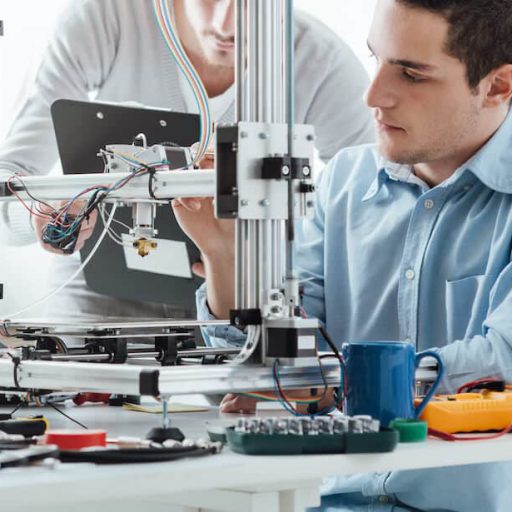
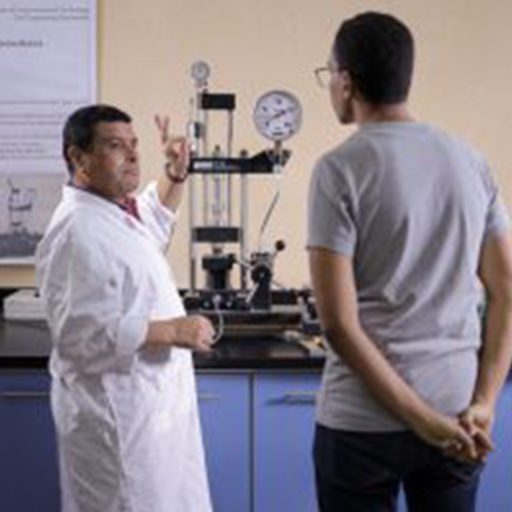
The School has practical skills laboratories; to enhance the experience and the education of its students. Skill labs train and educate the students on a variety of Applied Arts skills in order to prepare them for the competitive work market.